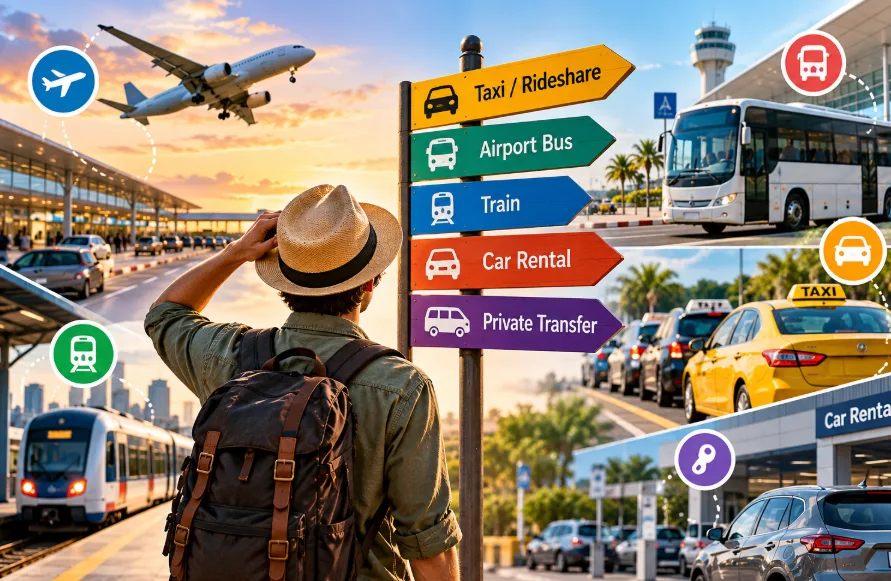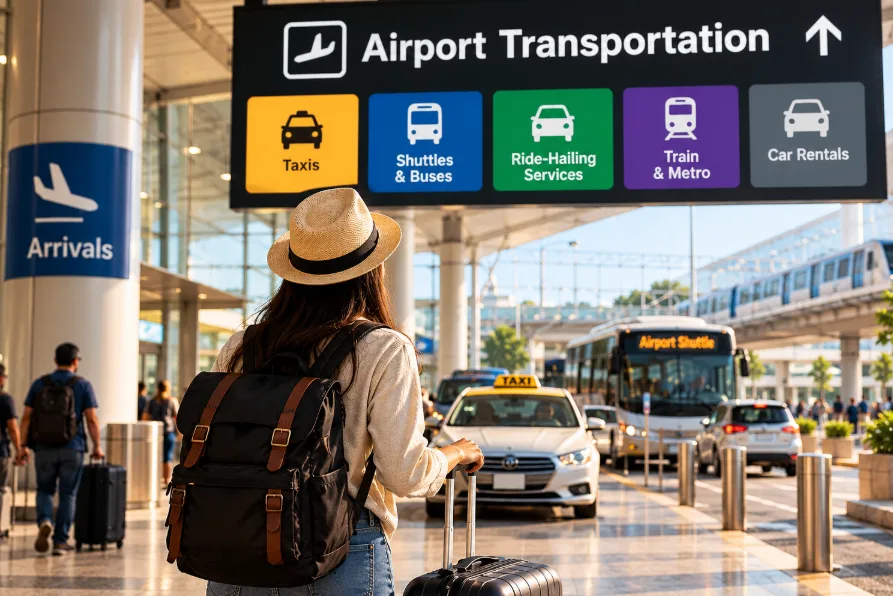
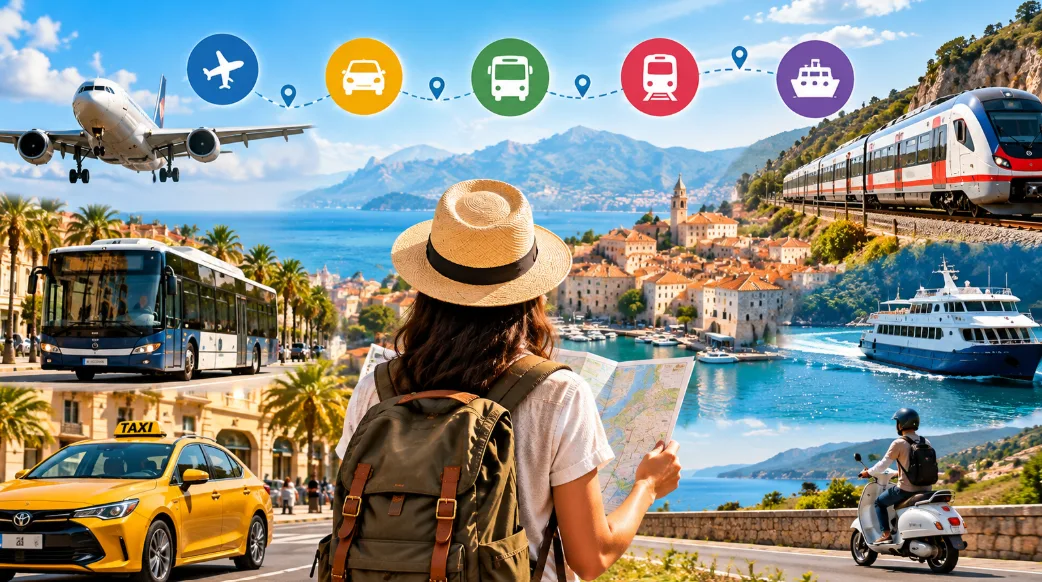
Choosing the right transportation for your trip means matching each part of the journey, from airport arrival to daily sightseeing, with the option that best suits your destination and plans.
A great trip isn't just about choosing where to go. It's also about figuring out how you'll move once you arrive.
Airport transfers, trains, buses, rental cars, taxis, and walking can all play a role in getting around a new destination. The best option often depends on the city, the length of your stay, your itinerary, and how much flexibility you want.
Transportation may not be the most exciting part of planning a vacation, but thinking about it before you leave can make your trip considerably easier.
How Do You Choose the Right Transportation on Vacation?
There is rarely one perfect option for a whole trip. The right transportation usually combines several modes, depending on where you are and what you plan to do each day.
- Book an airport transfer if you arrive after 10 pm or with 2 or more large bags.
- Use metros and buses in cities with good networks; day passes often save money.
- Consider a rental car for rural areas or trips covering 3 or more towns.
- Walk short distances under 2 km to see more of the destination.
- Check travel times in advance so you don't lose half a day in transit.
Related reading: How to Choose the Best Transportation for Your Travel Style
Start With Your Arrival
The first transportation decision usually comes immediately after landing.
If you're arriving late at night, carrying several bags, or traveling with family, arranging an airport transfer in advance can make the first part of your trip simpler.
For shorter distances, a taxi or rideshare may be convenient. In cities with reliable rail connections, public transit from the airport can also be a practical option.
Before booking anything, check the distance between the airport and your accommodation, the available transportation options, and how late those services operate.
A few minutes of research before departure can prevent unnecessary stress after a long flight.
Consider Where You're Staying
Your accommodation can have a bigger impact on transportation than you might expect.
A property located close to major attractions may reduce the amount of time you spend commuting every day. Similarly, staying at a hotel near the airport can be particularly useful if you have an early-morning departure or a short overnight stay.
For longer vacations, however, being close to the city center or major transportation routes may be more useful than simply being close to the airport.
When comparing accommodation, look beyond the room itself. Check the surrounding area and consider how easily you can reach the places you actually want to visit.
Learn the Local Public Transit System
For many destinations, public transportation is one of the easiest ways to explore the city.
Metro systems, buses, trams, and local trains can often take you to popular neighborhoods and attractions without the expense of using a taxi for every journey.
Before your trip, look into:
- Airport connections
- Metro or train routes
- Travel passes
- Operating hours
- Ticketing systems
- Weekend and holiday schedules
You don't need to memorize the entire transportation network.
Identify the routes you'll probably use most often and save the relevant maps or information on your phone.
When a Train Makes More Sense
If your trip includes multiple cities, trains can be an efficient way to travel between destinations.
In many regions, train stations are located closer to city centers than airports, which can reduce the amount of additional transportation required after arrival.
If you're traveling between cities, check both the journey time and the location of the stations.
A slightly longer train journey can sometimes be more convenient if you arrive directly in the heart of your destination.
For travelers who prefer to stay close to major rail connections, choosing a hotel near a train station can also make early departures and multi-city itineraries easier to manage.
Think Carefully Before Renting a Car
A car rental can give you flexibility, but it isn't automatically the best choice for every destination.
In a city with an extensive metro or bus network, driving may actually make your trip more complicated. Parking can be expensive, traffic can be heavy, and unfamiliar roads can add unnecessary stress.
A rental car tends to make more sense when you're:
- Visiting rural areas
- Planning a road trip
- Exploring several smaller towns
- Traveling somewhere with limited public transit
- Carrying substantial luggage
Before renting, check parking availability at your accommodation and understand the local driving requirements.
Don't Forget About Walking
Walking is one of the simplest forms of transportation, and it can also change how you experience a destination.
If your accommodation is located in a walkable neighborhood, you may discover cafés, local shops, parks, and smaller attractions that you would otherwise miss.
When choosing where to stay, look at the map rather than relying only on the property's distance from one major landmark.
Being a 15-minute walk from several attractions can be more useful than being five minutes from one famous sight but far away from everything else.
Match Transportation to Your Itinerary
Your daily plans should influence where and how you travel.
For example, if your itinerary involves museums, restaurants, and historic neighborhoods concentrated in the city center, public transit and walking may be enough.
If you're planning to visit beaches, national parks, villages, or attractions outside the city, you'll need to think more carefully about longer-distance transportation.
Try grouping attractions by location.
Instead of crossing the entire city several times in one day, plan activities that are relatively close together. This saves transportation time and leaves more time for actually enjoying your destination.
Think About the Time of Day
Transportation can work very differently depending on when you're traveling.
A metro system that is convenient during the afternoon may have limited service late at night. Similarly, airport buses may operate less frequently in the early morning.
If you have a flight at 6 a.m., don't wait until the night before to discover how you'll get to the airport.
Check your departure time, the expected journey duration, and your backup option.
The same applies when arriving late at night. Knowing your options before landing is particularly useful when you're unfamiliar with the destination.
Use Your Accommodation as Part of the Transportation Plan
Your hotel doesn't have to be simply the place where you sleep.
Location, parking, transfers, proximity to public transit, and access to major roads can all influence how convenient your trip becomes.
When comparing properties on platforms such as ZenHotels, consider transportation alongside room type and price. The right location can sometimes save both time and money throughout your trip.
This can help you choose accommodation that fits not just your budget, but also your itinerary.
Have a Backup Plan
Even well-planned transportation can occasionally go wrong.
A train may be delayed, a flight may arrive late, or a local service may stop operating earlier than expected.
You don't need a detailed backup plan for every possible situation. Just know what your alternatives are.
Keep the address of your accommodation saved offline, have important transportation information available on your phone, and know whether taxis or rideshare services operate in the area.
A small amount of preparation can make unexpected changes much easier to handle.
Frequently Asked Questions
Is it better to rent a car or use public transport on vacation?
The right transportation depends on the destination. Public transport is usually easier in large cities, while a car offers more flexibility in rural areas.
Should I book airport transfers in advance?
Booking ahead is helpful if you arrive late, travel with family or carry a lot of luggage, as it removes uncertainty on arrival. It is often the right transportation choice for the first hour of a trip.
How can I save money on transportation while traveling?
Look for day or multi-day passes, walk where practical, and compare prices between transfers, taxis and public transport.
Final Thoughts
Transportation is one of those parts of travel that can either quietly improve your trip or become a source of unnecessary frustration.
Think about how you'll get from the airport, how you'll move around the destination, whether you'll need a car, and how your accommodation fits into the overall plan.
The best transportation choice isn't always the cheapest or fastest option. It's the one that works naturally with your itinerary.
Plan the journey as a whole, choose accommodation that supports your travel plans, and leave yourself enough flexibility to enjoy the destination once you arrive.