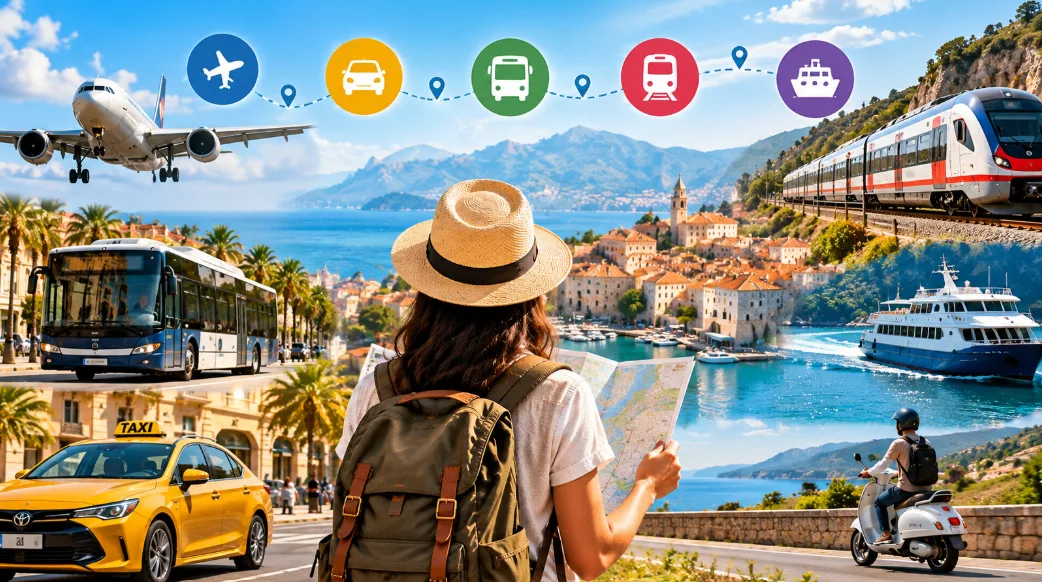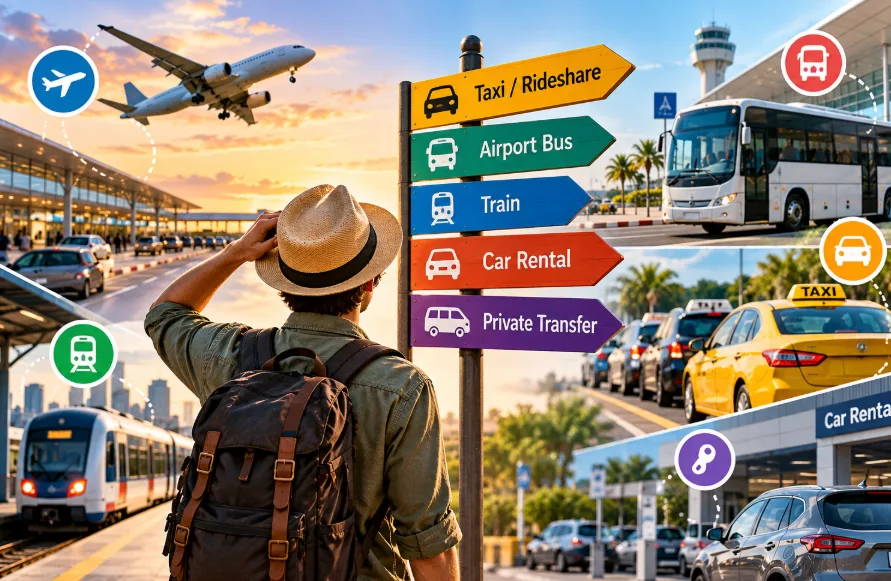

Choosing the right transportation for your holiday makes it easier to reach beaches, attractions and restaurants without wasting time.
Transportation plays a bigger role in a holiday than many travellers realise. Once you leave the airport, you'll need to decide how you're going to reach attractions, restaurants, beaches, shopping districts and other places on your itinerary.
The right choice can make a destination feel easy to explore, while the wrong one can turn a simple journey into a time-consuming part of the day.
How Do You Choose the Right Transportation for Your Holiday?
Look at your itinerary first: where you are staying, how spread out the sights are and how often you plan to travel. The right transportation is often a mix rather than a single option.
- In compact cities, a 1–7 day public transport pass is usually cheaper than taxis.
- For rural areas or 2 or more day trips, a hire car gives the most freedom.
- Families with 3 or more children or lots of luggage benefit from booked transfers.
- Check parking costs and fuel before choosing a car in city centres.
- Keep a taxi or ride app as a backup for late evenings.
Related reading: Getting Around on Vacation: How to Choose the Right Transportation for Your Trip
Match Transportation to Your Destination
Every destination has its own transportation personality.
Some cities are easy to explore using trains, buses and metro systems. Others are better suited to taxis or private vehicles. If you're visiting several smaller towns or rural areas, having your own vehicle can provide much greater flexibility.
Before booking anything, look at a map of your planned destinations and understand the distances between them.
Consider Car Hire for Flexible Trips
If your holiday involves multiple destinations, car hire can give you greater freedom over your schedule.
You aren't tied to train timetables or fixed departure points, and you can stop whenever you discover an interesting town, viewpoint or restaurant along the way.
Car hire can be particularly useful for road trips, countryside holidays and destinations where attractions are spread across a large area.
Luxury Escapes currently includes Car Hire as one of its travel categories, alongside hotels, tours, cruises, flights and experiences.
Don't Automatically Choose a Car
Having a car isn't always the most convenient option.
In dense cities, parking can be expensive and traffic can make short journeys surprisingly slow. Public transportation may actually be faster and easier.
If you're spending several days in a city centre, compare the cost and convenience of trains, buses, taxis and walking before deciding whether you'll actually need a vehicle.
Think About Transfers Between Destinations
Multi-stop holidays require a little more planning.
If you're moving from one hotel to another, consider how you'll make each journey. A direct private transfer can sometimes be much simpler than combining several different transportation methods, particularly when you're carrying luggage.
Some Luxury Escapes tours also include private transportation and airport transfers as part of the overall itinerary.
For travellers who prefer having the logistics organised, this can make a multi-destination trip easier to manage.
Build Transportation Into Your Itinerary
One common mistake is planning attractions without considering the time required to travel between them.
If two places appear close together on a map, that doesn't necessarily mean they're quick to reach. Traffic, transfers, walking time and public transportation schedules can all add to the journey.
Try grouping attractions by location. Spend one day exploring a particular neighbourhood or region rather than repeatedly crossing the same city.
This gives you more time to actually enjoy the destination.
Consider Comfort as Well as Cost
Price is obviously an important consideration, but it shouldn't be the only factor.
A cheaper transportation option may involve several changes and significantly more travel time. A slightly more expensive direct service could save you hours and make the journey much more comfortable.
This becomes especially relevant when travelling with children, older family members or lots of luggage.
Leave Room for Spontaneity
A good itinerary doesn't have to account for every minute of your holiday.
Leave some free time between major activities. You might discover a local market, find a restaurant you'd like to try or simply decide to spend longer somewhere than expected.
Flexible transportation makes these spontaneous changes easier.
LUXURY ESCAPES offers travel options across categories including Car Hire, Transfers & Cars, flights, tours and experiences, giving travellers different ways to plan the practical side of their trip.
Make Getting Around Part of the Experience
Transportation doesn't have to feel like time lost between destinations.
A scenic road trip, a comfortable private transfer or a train journey through an unfamiliar landscape can become part of the holiday itself.
How Should You Get From the Airport to Your Hotel?
Your first journey sets the tone for the whole holiday, so decide on it before you fly rather than at the arrivals hall.
- Pre-booked transfer: This is best for late-night arrivals, long flights, children or bulky luggage. Someone meets you, and the price is agreed in advance.
- Airport train or bus: This is often the cheapest and quickest option into a city centre. It works well if your hotel is near a station and you can manage your bags on stairs and escalators.
- Official taxi rank: This is convenient when you can't plan ahead. Use the marked rank inside the terminal rather than accepting offers from drivers who approach you.
- Car hire from the airport: This makes sense if you're heading straight out of the city. It's less useful if your first few days are in a busy centre where you'd pay for parking.
Check your hotel's exact location, your landing time and whether public services still run when you arrive. If you land late, a booked transfer usually saves stress. If you land in the daytime with light bags, the train or bus is often just as easy.
If you're weighing private transfers, shuttles, taxis and public transport, our guide on how to plan your airport transportation compares them on cost, luggage space and arrival time. It also explains when to book ahead for late or busy arrivals.
What Should You Check Before Hiring a Car Abroad?
A hire car only gives you freedom if there are no surprises at the rental desk. Run through these checks before you book:
- Driving licence rules: Some countries require an International Driving Permit alongside your licence. Check the official guidance for your destination.
- Insurance and excess: Find out what the basic cover includes and how high the excess is. Then decide whether you want extra cover.
- Fuel policy: A full-to-full policy is usually the simplest. Return the car with a full tank and keep the receipt.
- Tolls, vignettes and low-emission zones: Many regions charge for motorways or restrict city-centre access. Research these before you drive.
- Deposit and card: Rental firms often need a credit card in the main driver's name to hold a deposit.
- Pick-up location: Collecting the car on the day you leave the city can save several days of parking fees.
At pick-up, photograph or film the car from all sides, including existing scratches and the fuel gauge. Do the same at drop-off.
Which Transport Suits Your Type of Holiday?
Different holiday styles call for different transport. Use this as a starting point:
- City break: Walk where you can and buy a multi-day transit pass. Use taxis only late at night. A car is usually more hassle than help.
- Beach or resort stay: Book a transfer from the airport. Then rely on walking, local buses or the occasional taxi. Hire a car for just a day or two if you want to explore.
- Road trip or countryside tour: Car hire is the natural choice. Plan realistic driving times so you aren't on the road all day.
- Multi-city trip: Trains or short flights between cities, combined with public transport within each city, often work better than a car.
- Island hopping: Check ferry timetables early, as services can be less frequent outside peak season. Consider local scooter or car hire on each island.
- Travelling with young children or older relatives: Prioritise direct, door-to-door options such as private transfers, even if they cost a little more.
How Should You Plan the Journey Back to the Airport?
Departure day is when the wrong transport choice causes the most stress. Plan it as carefully as your arrival.
- Work backwards from your flight: Start with the airline's recommended check-in time. Then add the travel time, plus a buffer for traffic, delays or a missed connection.
- Check early-morning services: Trains and buses may not run early enough for a dawn flight. If they don't, pre-book a transfer or taxi the day before.
- Handle checkout and late flights: If your flight leaves late, ask your hotel whether it can store your bags. That lets you enjoy a final half-day without dragging luggage around.
- Returning a hire car: Allow extra time to refuel, find the return area and complete the inspection. Car hire return points aren't always next to the terminal.
If you're on a budget, a common approach is to use public transport for sightseeing and pay for a transfer or taxi only on the departure leg. That's the one journey where reliability matters most.
How Do You Pay for Local Transport Abroad?
Knowing how to pay before you arrive saves time at ticket machines and avoids fines for travelling without a valid ticket.
- Contactless cards and phones: Many cities let you tap a bank card or phone at the barrier. Check with your bank about foreign transaction fees first.
- Local transit cards: Some systems use a rechargeable card that you buy at stations or kiosks. These can be better value than single tickets if you travel often.
- Cash for smaller services: Rural buses, some ferries and local taxis may only take cash. Carry a small amount of local currency.
- Official transport apps: Download the city's transit app or a trusted journey planner before you travel. Many let you buy tickets on your phone and download maps for offline use.
- Validate your ticket: In some places you must stamp or tap your ticket before boarding, even if you've already bought it.
A quick look at the local transport operator's website before your trip will tell you which of these applies.
Is Renting a Scooter or Bike a Good Idea on Holiday?
Scooters, e-bikes and bicycles can be the right transportation for islands, beach towns and flat, compact cities. You can park almost anywhere and reach quiet spots that buses don't serve. They do carry more risk than other options, so check a few things first.
- Licence requirements: Riding a motor scooter often requires a motorcycle entitlement on your licence, not just a car licence. Check the rules for your destination.
- Travel insurance: Many policies exclude scooter accidents, or cover them only under conditions such as wearing a helmet and holding the correct licence. Read your policy before you ride.
- Helmets and condition: Ask for a helmet that fits. Check the brakes, lights and tyres before you set off, and photograph any existing damage.
- Local traffic: Watch how locals drive for a while before joining in. Avoid riding after dark on unfamiliar roads.
For short trips in cities, bike-share schemes and e-scooter apps are a low-commitment alternative to a full-day rental.
How to Budget for Holiday Transportation
Transportation costs can quickly add up, sometimes rivaling the price of your accommodation. To keep your holiday transportation budget under control, look beyond the ticket price. Factor in hidden expenses such as airport parking, fuel, road tolls, and city-centre parking fees, which can quickly double the cost of a cheap car rental.
If you are relying on public transport, check if the destination offers tourist cards that combine unlimited travel with discounted entry to major attractions. Many cities also cap daily fares when you use contactless payment, meaning you will never pay more than a set amount per day.
For multi-stop trips, compare the total cost of a train ticket for your entire group against a single car rental. While a car might seem more expensive upfront, it is often more economical for families or groups of three or more when compared to buying multiple individual train tickets.
Safety Considerations for Holiday Transportation
Staying safe while navigating a new destination should always be a priority. When planning your holiday transportation, research the local safety standards of your destination. In some countries, registered taxis are highly regulated and safe, while in others, app-based ride-sharing services are preferred because they track your journey via GPS and provide upfront driver details.
If you plan to use local buses or trains, keep your belongings secure and be particularly vigilant in crowded stations or tourist hotspots where pickpockets operate. Avoid using unlicensed transport operators who approach you at airports or train stations; always head to the official, marked ranks.
If you are renting a vehicle, familiarize yourself with local driving laws, speed limits, and road signs before setting off. Driving in unfamiliar environments can be challenging, so plan your routes during daylight hours whenever possible and avoid driving if you are tired after a long flight.
How to Handle Transport Logistics When Traveling With Children
Traveling with kids changes how you need to think about getting around. Public transport is great for saving money, but navigating crowded metro systems with a stroller and tired children can quickly become stressful. On arrival days, booking a private transfer ensures a car seat is ready and a driver is waiting at the terminal, removing the guesswork after a long flight. If you plan to rent a car, confirm that the rental agency provides age-appropriate child seats, as availability can sometimes be limited during peak seasons. For daily sightseeing, pacing is key. Try to limit the number of connections you make on public transport and pick hotels that sit within walking distance of central parks, beaches, or major attractions. Building in extra time for bathroom breaks, snack stops, and slow walks will keep everyone comfortable and ensure your daily journeys remain a smooth part of your holiday experience rather than a daily battle.
Eco-Friendly Travel: Choosing Sustainable Transportation Options
More travelers are looking for ways to reduce their environmental impact while exploring new destinations. Opting for trains, trams, and electric buses over private vehicles or domestic flights is one of the most effective ways to lower your carbon footprint on holiday. When visiting historic city centres, walking and cycling are not only zero-emission choices but often the fastest ways to navigate narrow streets and avoid traffic congestion. Many cities now feature robust bike-share programs and electric scooter networks that make short trips effortless. If you do need to rent a car for rural exploration or a road trip, look into hybrid or electric vehicle options at the rental desk, and check if your accommodation offers EV charging stations. Choosing eco-friendly transport allows you to support local green initiatives while experiencing the destination at a slower, more immersive pace.
Evaluating Local Public Transit Networks Before You Go
Before you arrive at your destination, taking a few minutes to research the local public transit network can save you from confusion and unexpected expenses. Different cities rely on different systems, ranging from underground metro networks and commuter trains to extensive tram and bus lines. Check whether the city uses an integrated ticketing system where a single pass works across multiple modes of transport. You should also look up the operating hours, as many regional transit systems shut down late at night, meaning you will need a backup plan like a licensed taxi or a ride-hailing app for evening returns. Understanding how zones work is another vital step; some cities charge flat rates, while others base fares on the distance you travel or the zones you cross. Knowing these details ahead of time ensures you buy the correct ticket type, avoid costly fines, and navigate the transit map with confidence.
Navigating Toll Roads and Driving Regulations Abroad
Driving in a foreign country offers incredible freedom, but it also requires an understanding of local road laws and toll systems. Many European and international destinations require physical stickers called vignettes, or electronic toll registrations, just to drive on major motorways. Failing to purchase one before hitting the highway can result in heavy fines sent directly to your rental car agency. Additionally, major cities frequently enforce strict low-emission zones or historical vehicle restriction areas that require a special environmental permit or completely ban non-resident drivers. Researching these regulations before your trip helps you plot alternate routes and avoid frustrating detours. Familiarize yourself with local speed limits, right-of-way rules, and parking restrictions, which can vary significantly from what you are used to at home. Taking these precautions protects your budget and keeps your road trip stress-free.
Balancing Convenience and Cost for Group Travel
When you are traveling with family or a group of friends, the math behind holiday transportation changes completely. While buying individual public transport tickets or train passes might be the cheapest option for a solo traveler, purchasing multiple tickets for a large group can quickly surpass the daily cost of a car rental or a private van transfer. Furthermore, coordinating several people through crowded train stations and bus interchanges adds a layer of logistical complexity that can drain your energy. A private transfer or a multi-passenger vehicle rental often provides the best value by offering door-to-door convenience, keeping everyone together, and easily accommodating bulky luggage and strollers. When planning group journeys, calculate the combined ticket costs against private options early on to find the sweet spot between financial savings and travel comfort.
Does Trip Length Change the Right Transportation?
Yes. How long you're away often matters as much as where you're going.
- Weekend break (2–3 days): Time is your scarcest resource. Stay central, walk and use public transport or taxis. Hiring a car rarely pays off, because collecting and returning it eats into a short trip.
- One week: This is where a mix works best. Spend city days on public transport, then hire a car for one to three days for countryside or coastal trips. You only pay for the car when you actually use it.
- Two weeks or longer: Longer trips usually involve more bases and more ground to cover. A longer car hire or a rail pass can make sense here. Check whether weekly rates or multi-day passes beat paying day by day.
As a rule of thumb, the shorter the trip, the more you should pay for speed and simplicity. The longer the trip, the more it pays to plan for value and flexibility.
Choosing the Right Transportation for Travellers With Reduced Mobility
If anyone in your group uses a wheelchair, walks slowly or can't manage stairs, accessibility should guide every transport decision.
- Check step-free access in advance: Many metro and train stations, especially older ones, have stairs or out-of-order lifts. Most transit operators publish accessibility maps on their websites.
- Request assistance early: Airlines, rail operators and some ferry companies offer assistance services. These usually need to be booked ahead rather than on the day.
- Ask transfer providers the right questions: Confirm whether the vehicle can carry a folded wheelchair or mobility scooter. Ask whether a ramp or adapted vehicle is available if needed.
- Consider terrain, not just transport: Cobbled old towns, steep hillside villages and beach paths can be harder to manage than the journey itself.
When accessibility is a priority, the right transportation is often a door-to-door option, even if it costs more. Choosing a hotel close to accessible stations or stops can also make daily sightseeing much easier.
Are Night Trains and Overnight Ferries Worth It on Holiday?
They can be, especially on multi-destination trips. An overnight journey combines transport and a night's accommodation. That can save you a hotel night and a full day of daytime travel.
They work best when:
- The distance is long but not huge: Routes of several hundred kilometres let you depart in the evening and arrive in the morning.
- You want to arrive in the city centre: Trains and many ferries drop you closer to the action than most airports do.
- You're carrying luggage: Rules on bags are often more relaxed than on budget flights.
There are trade-offs to weigh up:
- Sleep quality: This varies by person and by cabin type. A private cabin or sleeper berth costs more than a seat but is far more restful.
- Booking: Popular routes can sell out in peak season, so book early.
- Timetables: Some services don't run every night or every season.
If you'd rather not lose a day to travel, an overnight option may be the right transportation for linking two destinations.
A 5-Question Checklist to Find the Right Transportation Fast
If you're short on planning time, answer these five questions in order. Together they usually point to the right transportation for your holiday.
- Where are you sleeping? A central hotel near a station favours walking and public transport. A rural villa or resort outside town usually needs a car or transfers.
- How far apart are your must-see places? If most are within a short ride of each other, skip the car. If they're spread across a region, a car or tours make more sense.
- Who is travelling? Solo travellers and couples can manage public transport easily. Groups, young children and travellers with reduced mobility often benefit from door-to-door options.
- How much luggage are you moving, and how often? Frequent hotel changes with big bags favour transfers or a car.
- Are you comfortable driving there? Unfamiliar road rules, driving on the other side or a manual gearbox can make a car more stressful than it's worth.
Write your answers next to each leg of the trip. You'll often find the right transportation changes from one leg to the next. That's normal, and usually the most efficient way to travel.
How Does the Season Affect the Right Transportation?
The time of year can change which option makes sense, even for the same destination.
- Peak season: Roads to beaches and popular sights can be congested, and parking fills up early. Hire cars, transfers and long-distance trains may sell out, so book main journeys ahead.
- Off-season: Ferries, tourist buses and some rural routes often run less frequently or stop altogether. A car can become more useful when public services thin out.
- Hot weather: Long walks and waits at exposed bus stops can be draining, especially with children. Air-conditioned trains, taxis or a car may be worth the extra cost in the middle of the day.
- Winter and mountain areas: Snow, ice and short daylight hours make driving harder. Check whether winter tyres or snow chains are required. Trains and organised transfers are often the safer choice.
- Rainy or storm seasons: Ferries and small flights can be cancelled at short notice. Build a spare day into island trips.
Before you book, check the operator's seasonal timetable rather than relying on general information. That way the right transportation you've planned is actually running when you arrive.
What Is the Right Transportation for Solo Travellers?
Travelling alone changes the cost and safety picture. You can't split a car hire or taxi fare, so public transport usually offers the best value.
- Use public transport as your default: Multi-day passes and contactless fare caps tend to work out cheapest when you're paying for one person.
- Join small-group tours for remote spots: For places buses don't reach, a day tour is often cheaper than hiring a car for one. It's also more sociable.
- Plan late-night returns: Know how you'll get back before you go out. Check when the last service runs, or use a licensed taxi or reputable app.
- Share your plans: Let someone at home or your accommodation know your route on longer journeys, especially if you're driving alone in rural areas.
- Pack to move easily: One manageable bag makes stations, stairs and buses far simpler when there's nobody to help.
For solo travellers, the right transportation is usually the option that keeps costs low without leaving you stranded or isolated at the end of the day.
How Do You Compare Transport Options Door to Door?
Don't compare ticket prices or headline journey times on their own. Compare the whole trip from your door to your destination. That's how you find the right transportation for each leg.
For every option you're considering, add up:
- Getting to the starting point: This includes the walk or ride to the station, stop or car park.
- Waiting time: Count how long until the next departure, and any check-in or security time.
- The journey itself: Include changes and connection times.
- The last stretch: This is the walk, taxi or parking search at the other end.
- Total cost for your whole group: Include fuel, parking and tolls for a car, and every individual ticket for public transport.
A train that looks slower on paper can win once you add airport security or a city-centre parking search. A cheap bus can lose once you add two taxis to reach it.
Then weigh the result against how much effort each option takes. Ask how many changes there are, how far you'll carry luggage and how reliable the option is at that time of day. If two options come out close on time and cost, choose the simpler one.
How Can You Take Day Trips Without Hiring a Car?
You don't always need a car to see the countryside, coast or nearby towns. Several alternatives can work just as well for a single day out:
- Regional trains and buses: Many popular day-trip destinations are linked by regular services. Check the return times first so you don't miss the last connection back.
- Organised day tours: Transport, timing and often entry are handled for you. This suits remote sights, wine regions or national parks with limited public transport.
- Private driver or taxi for the day: In some destinations you can agree a day rate with a driver. For a small group this can be competitive with car hire, and nobody has to drive.
- Boat and ferry services: Coastal and lake destinations often have scheduled boats that double as a scenic outing.
- One-day car hire: If only one trip really needs a car, rent for that day alone instead of the whole holiday.
Ask your hotel or the local tourist office which options locals and visitors use most. They usually know which routes run reliably and which are better avoided.
What Are the Most Common Holiday Transport Mistakes?
Most transport problems on holiday come from a handful of avoidable mistakes:
- Hiring a car for the whole trip by default. You pay for parking and an idle car on city days. Hire it only for the days you need it.
- Underestimating journey times. Map apps rarely account for holiday traffic, finding parking or slow walks with children. Add a buffer to every leg.
- Booking accommodation before checking transport. A cheaper hotel far from stations can cost more in taxis and lost time than a central one.
- Leaving key journeys to the last minute. Airport transfers, ferries and long-distance trains can sell out in busy periods.
- Assuming services run late or every day. Check last departures, weekend timetables and seasonal schedules.
- Having no backup. Save a licensed taxi number or ride app, and keep some local cash for when your first plan falls through.
Avoiding these mistakes matters more than finding the perfect option. A simple, well-timed plan beats a clever one that relies on everything running smoothly.
Frequently Asked Questions
Should I rent a car on holiday?
A car offers freedom for exploring regions with limited public transport, but consider parking, local driving rules and fuel costs.
How do I combine different types of transport?
Use transfers for arrival and departure, public transport for city days and tours or rentals for day trips further away.
How can I keep transport costs under control?
Plan your main journeys in advance, compare passes and packages, and group activities by area to reduce travel time.
Is it better to book an airport transfer in advance?
Booking ahead is usually worthwhile if you arrive late, travel with children or carry a lot of luggage. You'll know the price upfront and won't have to queue or negotiate. For daytime arrivals with light bags, airport trains or buses are often a good alternative.
Do I need an International Driving Permit to hire a car on holiday?
It depends on your destination and where your licence was issued. Some countries require a permit and others don't. Check the official government travel advice and your rental company's terms before you travel.
Are ride-hailing apps available in every holiday destination?
No. Availability varies by country and even by city, and some places rely mainly on licensed taxis or local apps. Check which services operate at your destination before you leave, and download the app while you still have reliable internet.
Can I use public transport with large suitcases?
Usually yes, but it can be tiring at busy times or at stations without lifts. If you have heavy luggage, take a transfer or taxi for arrival and departure days, and save public transport for sightseeing days when you travel light.
Is it safe to take a taxi at night on holiday?
Generally yes, if you use official taxi ranks, licensed taxis or a reputable app rather than accepting offers from drivers who approach you. Ask your hotel which companies they recommend, and share your trip details with someone if you're travelling alone.
How far in advance should I book car hire for a holiday?
Book as early as you can for school holidays and peak season. Availability can be tight then, especially for automatic cars and larger vehicles. Choose a booking with free cancellation so you can rebook if prices drop.
Can I pick up a hire car in one place and drop it off in another?
Often yes, but one-way rentals can carry an extra fee. Cross-border drop-offs may be restricted or not allowed at all. Check the terms before you build a route around a one-way rental.
Are tourist city passes worth it for transport?
They can be if the pass includes unlimited public transport and you plan to visit several of the attractions it covers. Add up the individual ticket costs for your actual plans before you buy, as a pass only saves money if you use it enough.
How do I estimate my holiday transportation budget?
Research the average cost of a daily transit pass versus a one-day car rental in your destination. Don't forget to add hidden costs like fuel, parking fees, and road tolls to your estimate.
Is it cheaper to buy transit tickets individually or get a multi-day pass?
Multi-day transit passes are almost always cheaper if you plan to make more than two or three journeys a day. If you prefer walking and only need occasional rides, single tickets or contactless pay-as-you-go are better options.
What should I do if my holiday transportation is delayed or cancelled?
Keep local operator helpline numbers or apps on your phone, and always have a backup option like a registered ride-sharing app. If you have booked a private transfer, check their delay policy to ensure they will wait if your flight is late.
Can I use digital train tickets on my phone across different countries?
Most major rail networks accept mobile tickets or QR codes stored on your phone or in official apps. However, it is always wise to take a screenshot of your ticket or print a paper backup in case your device loses battery or internet connection.
What should I do if my flight is delayed and I booked a private transfer?
Contact your transfer provider as soon as you know about the delay, using the emergency number provided in your booking confirmation. Most reputable companies monitor flight numbers and adjust pickup times automatically, but direct communication prevents misunderstandings.
Are there luggage restrictions on regional buses and trains?
Standard trains and long-distance coaches generally allow suitcases, but space on board can be limited during peak hours. Try to book seats near luggage racks, and pack light if you plan to rely heavily on regional public transport.
How can I find out if my destination requires an international driving permit?
Check your home country's official government foreign travel advisory website before you depart. It will list the specific driving document requirements for every country worldwide.
What should I do if a rental car agency tries to sell me redundant insurance at the desk?
Review your existing coverage or independent third-party excess insurance policy before you travel so you know exactly what is already included. This allows you to decline unnecessary duplicate coverage firmly and politely at the counter.
Are airport shuttle buses usually cheaper than trains?
Shuttle buses are often slightly cheaper than express airport trains, though journey times can be longer if you hit heavy traffic entering the city centre. Compare both options against your hotel's proximity to the nearest station before booking.
What is the right transportation for a holiday if I don't drive?
Choose destinations with good public transport, such as major cities or well-connected rail regions. Base yourself near a main station. Use organised tours, private transfers or taxis to reach places that buses and trains don't serve.
Should I book an automatic or a manual hire car?
If you aren't confident with a manual gearbox, book an automatic. Driving unfamiliar roads is demanding enough. In some countries automatics are less common, so reserve one early, especially in peak season.
Do I need to book train tickets in advance on holiday?
It depends on the route. Local and regional trains can often be bought on the day. Long-distance and high-speed services may need reservations and are often cheaper when booked early.
Is it worth hiring a car for only part of my holiday?
Often, yes. Hiring a car just for the days you leave the city avoids paying for parking and an idle vehicle. Use public transport for the rest of your stay.
Should I get a local SIM or eSIM to use transport apps abroad?
It's usually worth it if you rely on journey planners, ride-hailing apps or mobile tickets. Reliable data lets you check live departures and book rides on the go. Download offline maps as a backup in case your signal drops.
How do I get around if I don't speak the local language?
Save your hotel's address in the local language and script to show taxi drivers. Use official transport apps, many of which offer an English option. Major stations and airports usually have signs or staff who can help with basic directions.
Is it worth paying for first class on trains during a holiday?
It can be on long journeys, at busy times or when you're carrying luggage, as you'll often get more space and a quieter carriage. On short regional trips, standard class is usually perfectly comfortable.
Can I hire a car with a debit card instead of a credit card?
Some rental companies accept debit cards, but many require a credit card in the main driver's name for the deposit. Others accept debit cards only with extra conditions. Check the rental terms before you book so you aren't turned away at the desk.
Is hiring a private driver for a day worth it on holiday?
It can be, especially for small groups, travellers who don't want to drive or areas with difficult roads. Agree the price, hours and route clearly before you set off, and compare the cost with a day tour or one-day car hire.
Can I take a hire car on a ferry or across a border?
Sometimes, but many rental companies restrict ferry crossings and cross-border travel or charge extra for them. Check the rental terms and tell the company your plans when you book.
Are ride-hailing apps cheaper than taxis on holiday?
It varies by destination and time of day. Apps often show the price upfront, but surge pricing at busy times can make a licensed taxi cheaper, so compare both when you can.
Should I choose my hotel based on transport links?
Yes, if you plan to rely on public transport. Staying within walking distance of a main station or stop usually saves time and taxi fares every day of your trip.
Final Thoughts
The key is to choose transportation based on the type of trip you're taking. Once your transport fits your itinerary rather than working against it, exploring a new destination becomes considerably easier—and often more enjoyable.