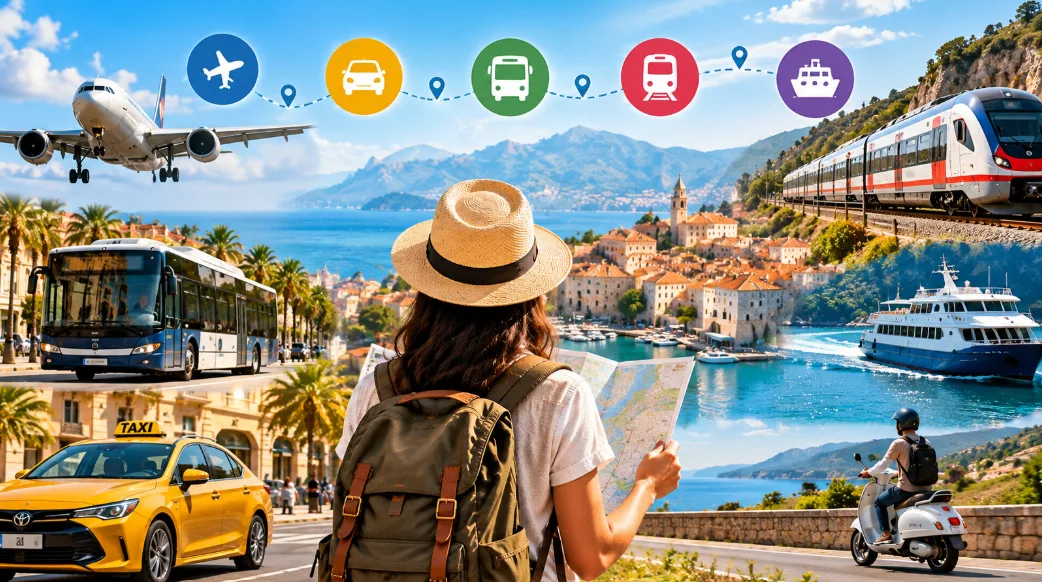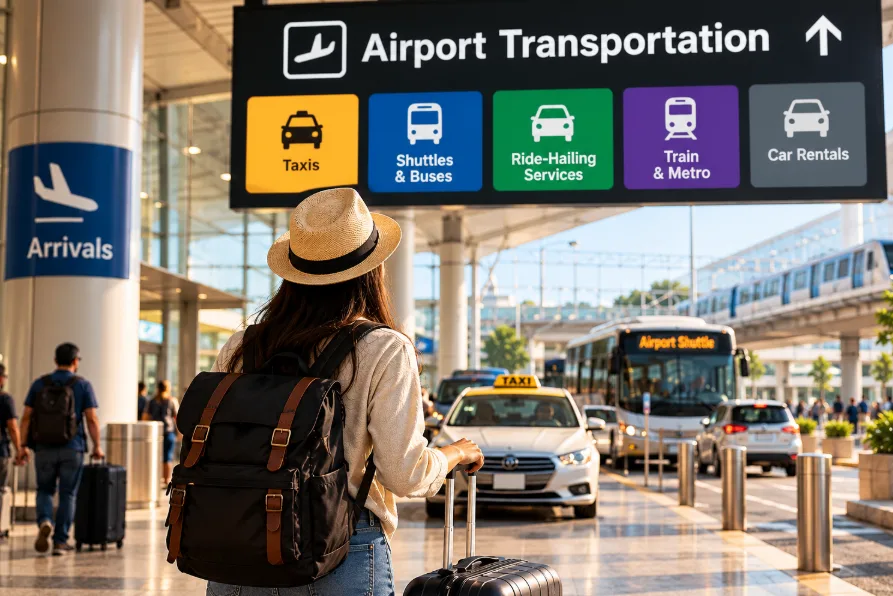
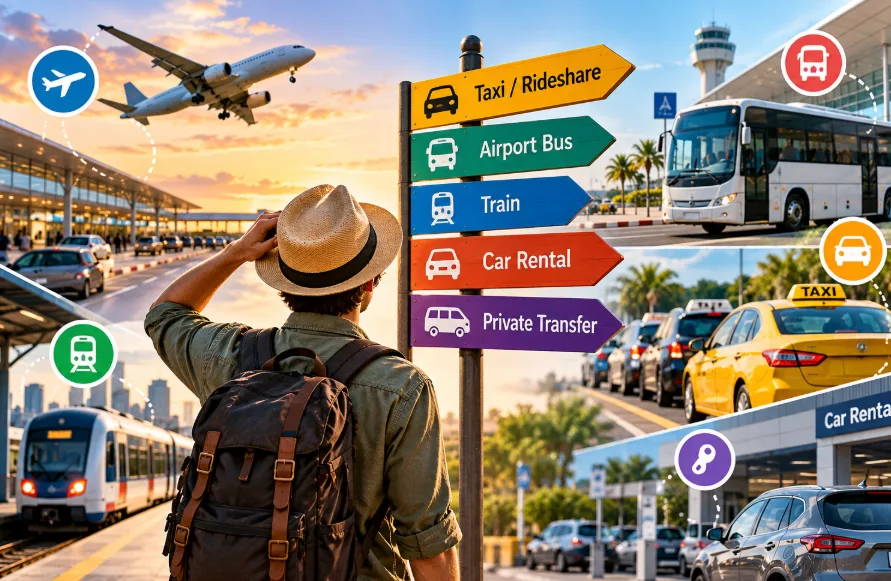
The best transportation for any trip balances your travel pace, physical luggage load, group size, and total route budget rather than relying on a single transit mode. Picking the right mix means looking at door-to-door transit time instead of vehicle speed alone, since transfers and terminal check-ins regularly add hidden hours to your schedule. Aligning how you get around with where you stay creates a predictable, relaxed schedule from arrival to departure.
Selecting transit without checking regional infrastructure can derail an itinerary before it begins. A rental car gives complete freedom in rural valleys but turns into an expensive headache in historic downtown cores with restricted driving zones and steep parking rates. Conversely, relying strictly on rail works across Western Europe or Japan but creates major logistical headaches across rural North America or regional Australia. To find the right fit, you need a realistic look at how you spend your days and how much transit hassle you tolerate.
For broader vacation planning frameworks, see our detailed overview on Getting Around on Vacation: How to Choose the Right Transportation for Your Trip.
Which Factors Determine the Best Transportation for You?
Before booking tickets or vehicle rentals, evaluate four primary constraints that dictate transit success:
1. Luggage volume and mobility. Hauling two large hard-shell suitcases per person through cobblestone alleys or onto packed subway cars causes immediate fatigue. If you travel heavy, direct transfers or rental cars save physical strain. If you travel with a single carry-on backpack, public subways and commuter buses give you rapid, low-cost movement.
2. Party composition and accessibility. Solo adults can sprint between tight train connections. Families managing strollers, small children, or older relatives need predictable steps, minimal platform transfers, and guaranteed seating. A dedicated transfer service eliminates confusion after long flights.
3. Destination geography. Dense urban capitals penalize driving with congestion charges and scarce parking. Sprawling regions, national parks, and coastal routes require personal wheels to see key sights on your own schedule.
4. Real door-to-door transit time. A short flight listed at 50 minutes actually takes four hours once you factor in traveling to the outskirts, security screenings, boarding protocols, baggage collection, and downtown transit from the arrival airport. High-speed trains or regional coaches running city center to city center routinely beat air travel over distances under 400 miles.
Step-by-Step Guide to Planning Your Route
Follow this five-step sequence before booking any tickets or reservations to avoid paying for transit you cannot realistically use.
Step 1: Map Your Hubs and Outliers
Drop all your target stops into a digital mapping tool. Group urban attractions into walkable clusters. Mark destinations that sit more than 15 miles outside the urban core. This map shows you immediately whether you need continuous vehicle access or merely a one-time transit ticket.
Step 2: Calculate Door-to-Door Time
Never compare transit based solely on scheduled departure-to-arrival clocks. Add 45 minutes for inner-city bus or subway connections on either end. Add two hours for domestic flights and three hours for international departures. For rail, add 20 minutes to arrive before boarding.
Step 3: Run the Full Group Math
Public transit passes seem cheap until you multiply a daily card by four or five family members. At that point, a pre-booked car service or a mid-size rental car often costs less per day while delivering door-to-door convenience. Solo travelers, by contrast, almost always save money using rail and municipal buses.
Step 4: Verify Local Regulations
If you plan to drive, verify whether your destination requires an International Driving Permit, enforces low-emission zones, or utilizes toll transponders. In parts of Europe, driving into an unauthorized historic zone triggers automatic automated fines that car rental companies pass directly to your credit card months later.
Step 5: Check Night and Weekend Schedules
Transit schedules shrink significantly on Sundays, holidays, and after 10:00 PM. If your return flight leaves at 6:00 AM, confirm whether commuter rail runs at 3:30 AM. If public lines stop running, budget for an on-demand cab or arrange an early private driver in advance.
Comparing the Main Transport Options
Every transit mode features trade-offs between financial cost, flexibility, and physical energy.
Rail and Commuter Trains
Train travel remains the gold standard for regional transit across Europe, East Asia, and high-density corridors in North America. Stations sit directly in downtown centers, meaning you step off the carriage straight into the city without airport taxi queues.
- Pros: Zero baggage fees, spacious seating, scenic views, direct downtown arrival, productive work time.
- Cons: Rigid timetables, strike risks, expensive last-minute tickets on high-speed lines, platform transfers with heavy bags.
Rental Cars
A private vehicle unlocks remote coastlines, mountain passes, and small villages where public transit runs once a day or not at all.
- Pros: Complete schedule control, trunk storage for luggage, access to off-the-beaten-track sights, cost-effective for families.
- Cons: Fuel costs, parking fees, insurance deductibles, foreign traffic laws, driving fatigue in heavy urban traffic.
Municipal Transit (Buses, Trams, Metro)
Using local buses and subway lines is the most cost-effective method to experience a city like a resident while bypassing surface traffic jams.
- Pros: Lowest financial cost, frequent departures, access to residential neighborhoods, no parking hassles.
- Cons: Crowded peak hours, pickpocket risks, language barriers with ticketing kiosks, complex transfer maps.
If you are arriving in an unfamiliar metro area, read our detailed walkthrough on how to choose the right transport in a new destination.
Airport Transfers and Shuttles
A scheduled airport shuttle provides shared, direct transportation from the terminal curb to designated hotel clusters without taxi pricing.
- Pros: Substantially cheaper than private taxis, simpler than hauling bags through transit turnstiles, set pickup points.
- Cons: Multiple stops drop other passengers off first, fixed pickup windows, limited operating hours late at night.
For a smooth start right off the runway, see our practical advice in A Smoother Start to Your Trip: Planning Transportation From the Airport.
Private Vehicle Transfers
Booking a private transfer guarantees an individual vehicle and driver waiting for your party at the terminal arrival gate or hotel lobby.
- Pros: Door-to-door drop-off, flight delay tracking, fixed upfront pricing, assistance with heavy luggage.
- Cons: Highest cost profile, vulnerability to road traffic congestion, requires advance booking.
Ferries and Regional Watercraft
For island chains, peninsulas, and coastal cities, a ferry transfer is an essential leg of transit rather than merely a leisure cruise.
- Pros: Bypasses highway bottlenecks, handles vehicle transport to islands, relaxing open-air decks.
- Cons: Weather cancelations, rough seas causing motion sickness, seasonal schedule reductions in winter months.
Who Each Option Suits and Who Should Skip It
Choosing the best transportation requires matching the transit category to your travel profile:
- Solo Budget Explorers: Stick to municipal subways, regional buses, and walking. Skip rental cars and private transfers entirely, as single-passenger parking and rental fees drain funds fast.
- Families with Small Children: Book direct shuttles or a rental car with pre-reserved child seats. Skip multi-transfer train journeys that demand rushing between platforms with strollers and luggage in under five minutes.
- Remote Region Adventurers: Pick a rental car with unlimited mileage and gravel insurance coverage. Skip public transit networks, which rarely reach trailheads or rural farming communities.
- Fast-Paced Business Travelers: Rely on city-center high-speed rail or direct private transfers. Skip shared shuttles that make multiple hotel drop-offs before reaching your destination.
How Your Lodging Choice Changes Transit Costs
Where you sleep dictates how much money and time you burn getting around each day. Booking an inexpensive suburban hotel looks economical on paper until you add daily taxi fares or 90 minutes of round-trip transit to reach central attractions.
When browsing properties on ZenHotels, inspect the map view closely to check walking distances to the nearest subway entrance or regional rail hub. ZenHotels listings detail on-site parking policies, daily garage fees, and available shuttle services. However, keep in mind that ZenHotels displays properties managed by external operators, so you must always confirm whether airport transfer amenities require separate fees or advance scheduling directly with the front desk. Balancing accommodation location against transit availability keeps your total daily spend under control.
Common Transit Mistakes Travelers Make
Avoid these frequent transit errors to protect your wallet and your schedule:
- Assuming rail passes are always cheaper than point-to-point tickets. Multi-day rail passes require seat reservation fees on high-speed trains that add up quickly. If you only take two train trips, buying single point-to-point tickets well in advance usually saves substantial cash.
- Ignoring airport transfer logistics until landing. Exiting customs at 11:30 PM without a transit plan leaves you at the mercy of unregulated airport taxi touts or surge-priced rideshares. Always know your terminal exit route before takeoff.
- Renting a car for a pure city break. Paying daily rental fees, daily hotel parking fees, and road tolls while leaving a vehicle parked in a garage all day is one of the quickest ways to waste travel funds.
- Failing to validate tickets. In many European and Asian public transit networks, holding a physical paper ticket is not enough; you must insert it into an electronic validation stamping machine before boarding. Plainclothes transit inspectors issue non-negotiable cash fines on the spot if you board with an unvalidated ticket.
- Leaving zero transfer buffer. Scheduling a 30-minute layover between an international flight arrival and a regional train departure invites missed connections. Border control, baggage lines, and terminal navigation routinely take upwards of an hour.
What to Do When Transit Plans Go Wrong
Strikes, technical failures, mechanical breakdowns, and severe weather occur on every transport network. Prepare for disruptions with these practical actions:
- Download offline digital maps. Cellular reception drops in subway tunnels, mountain roads, and remote coastlines. Download your destination's regional offline map on your smartphone so you can route your way without an active data signal.
- Keep paper confirmations accessible. Digital boarding passes fail when phone batteries die. Keep a printed sheet showing your hotel address in the local language, your car rental voucher, and reservation confirmation numbers.
- Know the secondary transport route. If your scheduled intercity train is canceled due to rail maintenance, know whether an express bus line or regional airline operates along the same corridor.
- Carry emergency local cash. Electronic payment terminals occasionally fail in rural buses, foreign gas pumps, and licensed street taxis. Carrying modest amounts of local currency prevents being stranded at an automated terminal.
Frequently Asked Questions
What is the best transportation option for a multi-city vacation?
For multi-city routes covering distances under 400 miles between major hubs, high-speed rail is generally the most efficient choice because stations sit in central districts. For routes connecting rural villages or national parks, a rental car provides necessary schedule control. For distances exceeding 500 miles without high-speed rail links, regional flights remain the practical choice.
How far in advance should I book regional train tickets?
High-speed and long-distance trains in most countries open reservations two to three months before the departure date. Booking early secures discounted advance-purchase fares, whereas waiting until the day of travel often results in paying double or facing sold-out seat allocations.
Is it better to take a taxi or public transit from the airport?
Public rail or express airport buses are better if you arrive during peak rush-hour traffic and travel light, as trains bypass surface highway congestion entirely. A taxi or private transfer makes far more sense if you arrive late at night, travel with young children, or carry heavy luggage that makes maneuvering platforms difficult.
Do I need an International Driving Permit to rent a car abroad?
Many countries and international car rental agencies require an International Driving Permit alongside your domestic driver's license. Even where local rental desks fail to ask for it at pickup, traffic police can issue steep fines if you are stopped without one. Securing an IDP before leaving home ensures full legal compliance.
Can I rely solely on rideshare apps in smaller international towns?
No. While rideshare platforms operate widely in major global metropolises, their availability drops off rapidly in small towns, rural communities, and island destinations. Research local taxi dispatch numbers or confirm bus schedules rather than assuming an app-based car is waiting around the corner.
Final Thoughts
The best transportation strategy matches your itinerary rather than forcing your itinerary to conform to a single vehicle mode. Combine transit options logically: take high-speed trains between large metropolitan hubs, walk and use subways inside historic city districts, and reserve a rental car for rural loops where transit networks thin out.
Take time to review your daily transit routes alongside your hotel locations before paying non-refundable deposits. By planning for real door-to-door transit times, accounting for luggage logistics, and leaving comfortable margins between connections, you eliminate transit friction and keep your focus where it belongs: enjoying your destination.