
Staying active does not always mean following the same workout routine every day. One day might involve a long walk, another could be spent on a hiking trail, while weekends may be reserved for golf, tennis, or simply getting outside. Because different activities place different demands on your feet, choosing footwear based on how you actually spend your time can make a big difference.
Start With Your Main Activity
The first step is to think about what you do most often. Someone who walks several miles every day has different needs from someone who spends weekends hiking or playing tennis.
For everyday movement, walking shoes are a practical starting point. Look for a comfortable fit, adequate cushioning, and enough room for your feet to move naturally. If walking is part of your daily routine, comfort becomes especially important because even small pressure points can become noticeable over longer distances.
Consider the Terrain
Your environment matters just as much as the activity itself. Walking around a city, exercising on a treadmill, and exploring uneven outdoor paths can all require different types of support.
If outdoor adventures are part of your routine, hiking shoes can provide a more suitable option for trails and changing terrain. Look for a design that feels stable without restricting natural movement.
A good pair should also feel comfortable before you take it on a longer adventure. Wearing new footwear on a short walk first can help you identify whether the fit works for you.
Pay Attention to Width
Shoe length is only one part of getting the right fit. Width can be equally important, particularly for people who find standard footwear restrictive.
Wide fit shoes provide additional room across the foot, which can make everyday movement more comfortable for people who need a broader fit.
FitVille places considerable emphasis on wide and extra-wide footwear, with options across different activities and everyday uses.
Instead of assuming that a particular size will automatically feel right, pay attention to how your toes sit inside the shoe and whether the sides of your feet feel compressed.
Match Footwear to Your Sport
Sports footwear isn't one-size-fits-all. Running involves repetitive forward movement, while tennis and pickleball include quick changes in direction. Golf involves walking for extended periods, often across different surfaces.
For runners, running shoes should feel comfortable throughout your stride and provide the type of cushioning you personally prefer.
Similarly, someone who plays racquet sports may want footwear designed specifically for lateral movement rather than relying on a general-purpose sneaker.
Choosing footwear around the activity can help create a more comfortable experience than simply selecting a shoe based on appearance.
Don't Ignore Everyday Comfort
Not every active day involves a workout. Commuting, shopping, traveling, standing at work, and walking around town can add up to a surprising amount of time on your feet.
That's where versatile footwear becomes useful. A pair that combines a practical design with everyday comfort can work across several parts of your routine.
Accessories can also play a role. FitVille's range includes items such as insoles, socks, ankle supports, braces, and foot recovery tools alongside its footwear collections.
Build Your Footwear Collection Around Your Routine
You don't necessarily need a huge collection of shoes. Instead, consider having a few pairs that serve different purposes.
One comfortable everyday pair, one option for running or exercise, and another for outdoor activities may cover most routines. If you regularly participate in a particular sport, adding footwear designed for that activity can make sense.
Ultimately, choosing the right footwear is about understanding your own habits. Think about where you walk, what activities you enjoy, how much time you spend on your feet, and what kind of fit feels natural.
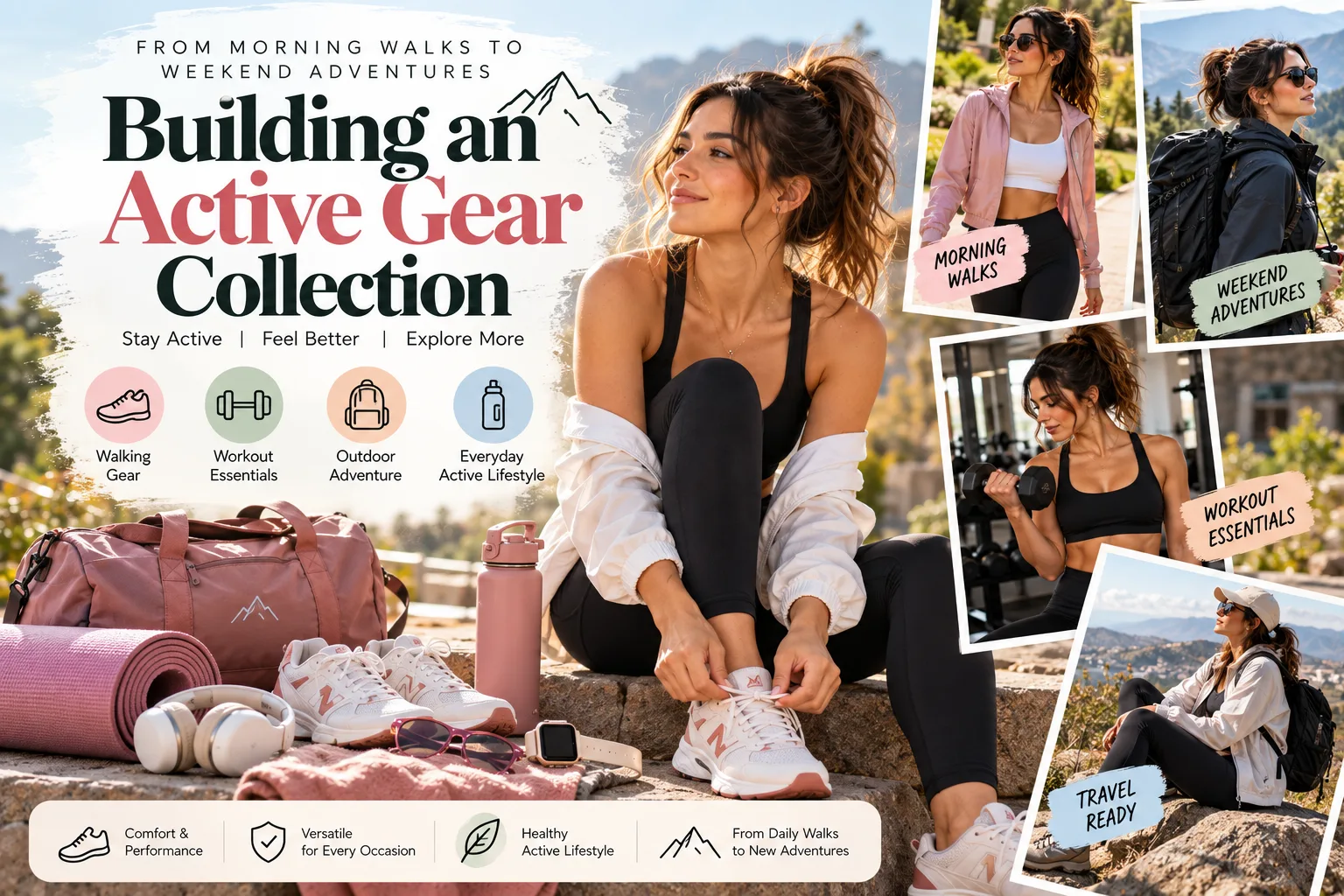
A practical approach is to start with one comfortable everyday walking shoe and add hiking, running or court shoes only once you do that activity regularly. For a step-by-step plan, see our guide to building an active gear collection around your weekly routine.
How Should Active Shoes Fit? A 5-Step Fit Check
A good fit matters more than any single feature. Use this quick check whenever you try on walking, running or hiking shoes.
1. Shop later in the day. Feet tend to swell slightly after hours of activity, so an afternoon fitting reflects how your shoes will feel on a long walk.
2. Wear the socks you'll actually use. Thin running socks and thicker hiking socks can change the fit noticeably.
3. Check toe room. As a rule of thumb, leave roughly a thumb's width between your longest toe and the end of the shoe. Your toes should be able to wiggle freely.
4. Feel the sides and heel. The sides of your feet shouldn't feel squeezed, and your heel shouldn't lift much as you walk.
5. Walk, don't just stand. Take a few minutes to walk around, including on stairs or a slope if possible, and notice any rubbing or pressure points.
If one foot is slightly larger than the other, which is common, fit the shoe to the larger foot. If you regularly fail step 4, a wide fit option may suit you better than going up a size in length.
Which Shoe Features Matter Most for Each Activity?
Each activity puts different demands on your feet. Here are the features to prioritise for common activities:
- Walking: consistent cushioning, a flexible forefoot and a comfortable heel collar for longer distances.
- Running: cushioning that suits your stride and a secure midfoot so your foot doesn't slide. Breathability also helps.
- Hiking: a grippy outsole with deeper lugs, a stable base for uneven ground and toe protection against rocks and roots.
- Tennis and pickleball: lateral support for side-to-side movement and a durable outsole suited to court surfaces.
- Golf: traction for grass and slopes, plus all-day comfort for walking long courses.
- Gym training: a flatter, stable sole for lifting and moderate flexibility for classes.
If you do 2 or 3 of these activities regularly, choose a specialist shoe for the one you do most. A versatile everyday pair can then cover the rest.
Key Takeaways
- Start with your main activity. Buy for what you do most often, not for occasional use.
- Match the terrain. City pavements, treadmills and trails each call for different grip and support.
- Check width as well as length. Pressure along the sides of your foot is a sign you may need a wider fit, not a bigger size.
- Test before long outings. Wear new shoes on a few short walks before a long hike or event.
- Keep a small rotation. Two or three pairs (everyday, exercise, outdoor) cover most active routines.
- Replace worn shoes. Flat cushioning, smooth tread or new aches are signs a pair has reached the end of its useful life.
Frequently Asked Questions
How do I know which shoe fits my activity?
Think about where and how often you move. Walking, running, gym training and hiking each place different demands on cushioning, grip and support.
Why does shoe width matter?
A shoe that is too narrow can cause pressure and discomfort. If you have wider feet, look for brands that offer wide or extra-wide fits.
When should I replace my everyday trainers?
Replace them when the cushioning feels flat, the tread is worn or you notice new discomfort after regular use.
Can I use running shoes for walking?
Yes, running shoes are generally comfortable for walking because they're cushioned and lightweight. However, dedicated walking shoes are often designed around a walking stride and may feel more stable for long, everyday distances.
Should I choose hiking shoes or hiking boots?
Hiking shoes suit well-maintained trails and day hikes where you want lighter, more flexible footwear. Boots with higher ankle coverage are often preferred for rough, rocky terrain or carrying heavier loads.
Is one pair of trainers enough for the gym and running?
For occasional mixed workouts, one versatile pair can work. If you run regularly or lift heavy weights, separate shoes are worth considering, because running shoes prioritise cushioning while training shoes favour a stable, flatter base.
Do insoles help with active footwear?
Insoles can add cushioning or support and may improve comfort in shoes that otherwise fit well. They can't fix a shoe that's the wrong size or width, so get the fit right first.
Final Thoughts
With that approach, brands such as FitVille can be explored based on the specific activities and fit requirements that matter most to you.