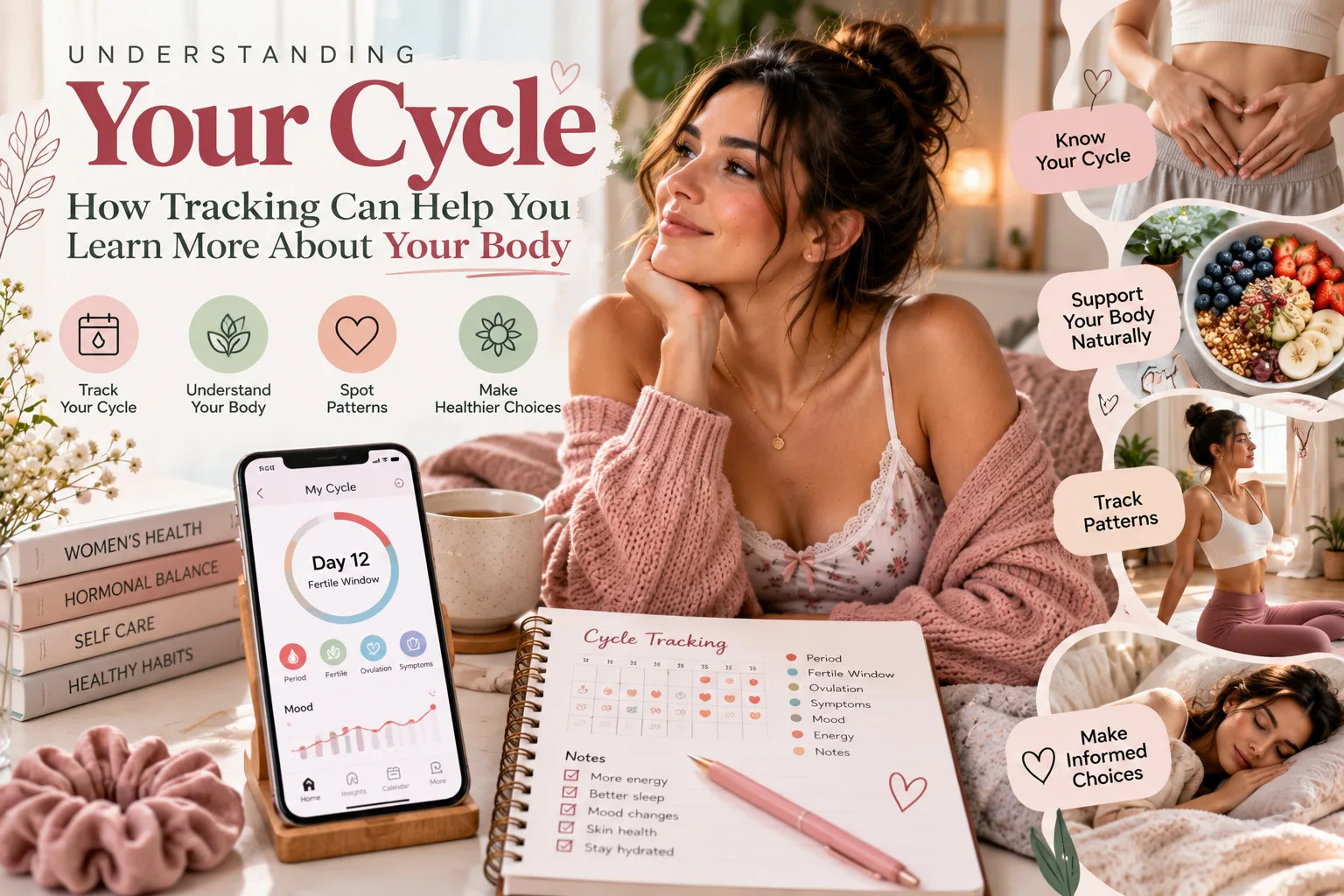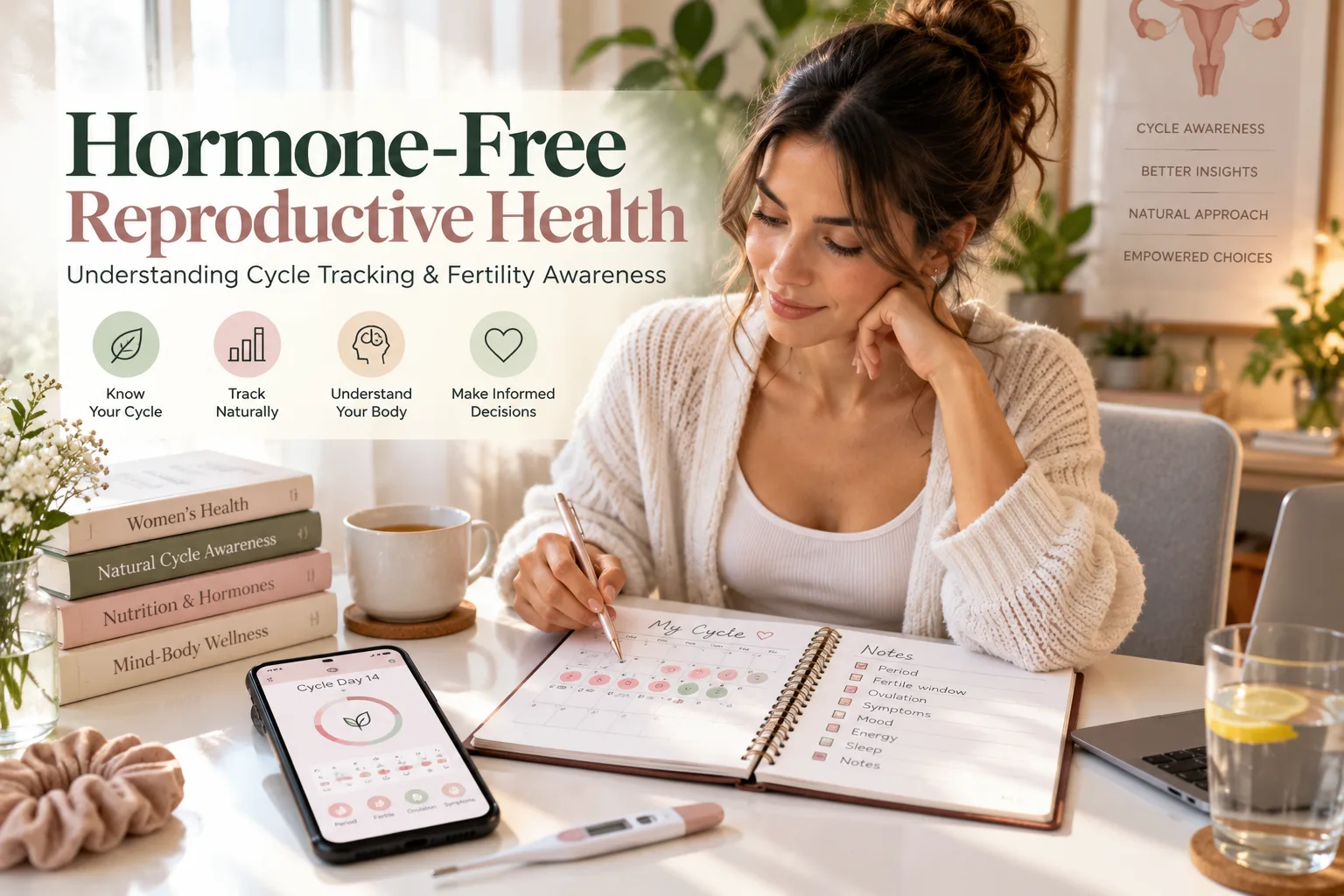

Managing your reproductive health without synthetic hormones involves understanding your body's biological rhythms rather than altering them. Hormone-free methods rely on tracking physiological indicators like basal body temperature and cervical fluid, using physical barriers, or choosing non-hormonal medical devices. By learning how these approaches function, you can evaluate whether a natural method aligns with your lifestyle, daily habits, and family planning goals.
For more background on physiological rhythms, read our guide on Understanding Your Cycle: How Tracking Can Help You Learn More About Your Body.
What Does Hormone-Free Reproductive Health Management Mean?
Hormone-free methods do not introduce synthetic estrogen or progestin into your system. Conventional hormonal contraception—such as oral contraceptive pills, hormonal intrauterine devices (IUDs), implants, injections, and patches—works primarily by suppressing ovulation, thinning the uterine lining, and thickening cervical mucus.
In contrast, hormone-free management leaves your natural endocrine system to run its course. Ovulation occurs naturally each month, and you experience genuine menstrual periods rather than withdrawal bleeds. People explore hormone-free birth control for multiple reasons: managing side effects associated with synthetic hormones, preparing for future pregnancy, monitoring underlying endocrine conditions, or simply wanting to understand their monthly cycles better.
Opting for a non-hormonal approach requires active participation. While a hormonal implant works in the background without daily attention, most non-hormonal methods require either daily observation, barrier preparation before intercourse, or a medical procedure to place a non-hormonal device.
How Do the Primary Hormone-Free Options Compare?
Non-hormonal methods fall into distinct categories. Each carries different trade-offs regarding convenience, effectiveness, cost, and user effort.
1. Fertility Awareness-Based Methods (FABMs)
Fertility awareness relies on identifying the fertile window—the roughly six days per cycle when unprotected intercourse can lead to pregnancy (the five days leading up to ovulation plus the day of ovulation itself).
- Symptothermal Method: Combines daily waking basal body temperature (BBT) with observations of cervical fluid changes and sometimes cervical position. It is highly structured and requires manual charting or dedicated apps.
- Cervical Mucus Methods (e.g., Billings, Creighton): Focus exclusively on the sensation and appearance of cervical fluid at the vulva throughout the day.
- Calendar/Standard Days Methods: Estimate fertility based on past cycle lengths. These are the least reliable because cycle lengths naturally vary from month to month.
- Regulated Digital Algorithms: Apps like Natural Cycles use basal body temperature data and statistical algorithms to identify fertile and non-fertile days. Natural Cycles is cleared by regulatory agencies (such as the US FDA) as a medical device for contraception, distinguishing it from general calendar-prediction trackers.
2. Barrier Methods
Barriers physically prevent sperm from entering the uterus. They are used exclusively during intercourse.
- Male and Female Condoms: The only methods that also reduce the transmission of sexually transmitted infections (STIs). Readily accessible and require zero daily maintenance.
- Diaphragms and Cervical Caps: Silicone cups inserted into the vagina alongside spermicide or contraceptive gel before intercourse. They must remain in place for at least six hours after intercourse.
- Sponge: A polyurethane foam device containing spermicide inserted over the cervix.
3. The Copper Intrauterine Device (IUD)
A small, T-shaped plastic frame wrapped in copper wire, inserted into the uterus by a healthcare provider. Copper ions act as a local spermicide, preventing fertilization without altering your natural hormone levels or stopping ovulation. It lasts between 5 and 10 years depending on the model, offering the highest non-permanent effectiveness rate with zero daily effort.
4. Permanent Methods
Surgical options include vasectomy (for male partners) and tubal ligation or bilateral salpingectomy (for female partners). These procedures are permanent and hormone-free, suited for individuals or couples who are certain they do not want biological children in the future.
Why Does Ovulation Tracking Matter Beyond Contraception?
Ovulation is not just an event relevant to pregnancy; it serves as a monthly vital sign. Each ovulatory cycle produces progesterone, a hormone that balances estrogen, supports bone mineral density, aids cardiovascular wellness, and promotes sound sleep.
Ovulation tracking provides concrete data about how your body functions. When you track indicators like basal temperature, you can confirm whether an egg was actually released. This distinction matters because anovulatory bleeds (bleeding without prior ovulation) can mimic regular periods while masking underlying issues such as polycystic ovary syndrome (PCOS), thyroid disorders, or high stress levels.
Tracking your baseline indicators builds a long-term record of your cycle health. If you experience sudden irregularity, unusually short luteal phases (the span between ovulation and menstruation), or abnormal bleeding patterns, you have objective data to share with a physician. Routine physical activity can also influence cycle regularity; pairing balanced wellness habits with reliable gear, such as choosing the right footwear for an active lifestyle, supports overall physical resilience.
Step-by-Step: How to Start Tracking Your Cycle Naturally
If you decide to practice fertility awareness for pregnancy prevention or pregnancy planning, establishing a disciplined habit is essential. Follow these steps to build an accurate baseline:
1. Choose Your Primary Biological Biomarkers
Decide whether you will track basal body temperature alone (using a digital device or algorithm), combine temperature with cervical fluid observations (the symptothermal approach), or monitor luteinizing hormone (LH) test strips alongside daily temperatures.
2. Acquire a Two-Decimal Basal Thermometer or Certified Sensor
A standard fever thermometer is not precise enough. You need a basal body temperature thermometer that measures to two decimal places (e.g., 97.45°F or 36.36°C) or a compatible wearable sensor cleared for fertility tracking.
3. Establish a Consistent Morning Routine
If using an oral thermometer, take your temperature immediately upon waking, before sitting up, speaking, checking your phone, or getting out of bed. Aim for the same wake-up window every day (ideally within a 30- to 60-minute variance), after at least three to four consecutive hours of sleep.
4. Observe and Record Cervical Fluid Throughout the Day
Check the sensation at your vulva and observe the appearance of fluid when wiping before urination. Note changes across the cycle: dry or sticky after your period, shifting to creamy, then clear, stretchy, and lubricative ("egg-white" consistency) as ovulation approaches.
5. Identify the Thermal Shift
After ovulation, progesterone causes resting body temperature to rise slightly (typically by 0.3°F to 0.5°F or 0.2°C to 0.3°C). A sustained high reading for three consecutive days above your previous six low readings confirms that ovulation has passed.
6. Establish Clear Rules for the Fertile Window
If your goal is preventing pregnancy, treat any day with fertile-quality cervical fluid or any day before a confirmed temperature shift as potentially fertile. During fertile days, use a barrier method such as condoms or practice abstinence.
Who Do Hormone-Free Approaches Suit, and Who Should Reconsider?
Hormone-free options are flexible, but they do not suit every lifestyle or health profile equally.
Who They Suit Best
- Individuals experiencing hormonal side effects: Those who struggle with mood swings, decreased libido, migraines, or elevated blood pressure while on synthetic hormones.
- People with medical contraindications: Anyone with a history of blood clots, estrogen-receptor-positive conditions, or cardiovascular risk factors that preclude synthetic estrogen.
- Those with predictable schedules: People who wake at roughly the same hour each day and can maintain a consistent logging habit.
- Couples with shared responsibility: Partners who communicate comfortably about fertile days, barrier use, or temporary abstinence.
Who Should Reconsider or Choose Non-Daily Alternatives
- Individuals with highly irregular sleep: Shift workers, parents of newborns, or frequent time-zone travelers may find manual waking temperature unfeasible. In such cases, passive wearable sensors or the copper IUD remove the need for strict waking routines.
- Those needing absolute protection against irregular cycles: If your cycles vary widely (e.g., from 21 to 60 days) due to unmanaged PCOS or hypothalamic amenorrhea, calendar-only methods are unsafe, and temperature algorithms will mark large portions of your cycle as potentially fertile.
- Couples where barrier use is inconsistent: If you or your partner find it difficult to use condoms or barriers consistently on red or fertile days, relying on natural birth control carries a higher risk of unintended pregnancy compared to "set-and-forget" methods like the copper IUD.
Common Mistakes to Avoid with Hormone-Free Methods
Many common pitfalls can lead to accidental pregnancy or frustration when switching away from hormonal contraception. Avoid these missteps:
- Relying on generic period-prediction apps: Standard calendar apps merely guess ovulation based on a 28-day average. They do not measure your real-time biology. If you ovulate early or late, calendar predictions will fail.
- Discarding irregular temperature disruptions: Alcohol consumption, poor sleep, travel, illness, and late wake-up times can artificially elevate your temperature. Failing to flag these readings can trick you or an app into assuming ovulation occurred when it did not.
- Assuming day 14 is always ovulation day: Biological systems vary. You may ovulate on day 11 in one cycle and day 19 in another. Base decisions on physical signs or measured data, never on calendar assumptions.
- Skipping barrier protection during the transition phase: When stopping hormonal birth control, your body may take weeks or months to re-establish a natural cycle. Use barrier protection continuously until you observe clear, reproducible cycle patterns.
- Confusing withdrawal bleeding with a true period: Bleeding that occurs shortly after stopping the pill is a withdrawal bleed caused by dropping synthetic hormone levels, not a sign of natural ovulation.
Digital Tools and Data Privacy in Reproductive Health
Using an application to track your cycle involves logging intimate biological details, sexual activity, and family planning intentions. Because this data is sensitive, examining how a service manages your information is an important consideration.
When evaluating any cycle-tracking app or device, look into the company's privacy policy:
- Regulatory Classification: Check whether the product is registered as a regulated medical device or merely marketed as a lifestyle app. Medical devices must comply with formal quality management systems.
- Data Storage and Encryption: Determine whether your data is anonymized, encrypted at rest, and stored securely.
- Commercial Data Practices: Verify whether the provider sells or shares de-identified health metrics with third-party advertisers or data brokers.
- Account Controls: Ensure you can delete your account and historical records permanently if you decide to stop using the platform.
Platforms operating in this category, including Natural Cycles, maintain dedicated privacy programs and security protocols tied to their regulatory clearances. However, reading the current terms and privacy declarations of any app before inputting personal records is good digital hygiene.
Frequently Asked Questions
How effective are hormone-free approaches compared to the pill?
Effectiveness depends heavily on the specific method and how consistently you follow its rules. The copper IUD has a failure rate below 1% with typical use because it requires no daily action. Fertility awareness methods and barrier methods have typical-use failure rates ranging from roughly 7% to 15%, though perfect use according to protocol yields significantly higher protection.
How long does it take for a natural cycle to return after stopping hormonal birth control?
Many people experience an initial withdrawal bleed within a few days of stopping hormonal birth control, but regular ovulatory cycles may take anywhere from one to six months to re-establish. During this transition, cycle lengths and symptoms can fluctuate as your ovaries and pituitary gland resume communication.
Can someone with irregular cycles use fertility tracking?
Yes, but it requires tracking direct biological biomarkers such as basal temperature and cervical fluid rather than calendar estimates. Irregular cycles mean your fertile window will move from month to month, which requires patience and may result in more days where barrier protection or abstinence is necessary.
Do hormone-free fertility methods protect against sexually transmitted infections (STIs)?
No. Natural family planning, fertility tracking apps, and copper IUDs do not provide any protection against STIs. Only barrier methods, primarily male and female external/internal condoms, lower the risk of STI transmission.
Can an app alone prevent pregnancy?
An app provides analysis, not physical protection. The software identifies which days carry a risk of pregnancy based on inputted data, but pregnancy prevention depends entirely on whether you abstain from intercourse or correctly use an effective barrier method on designated fertile days.
Final Thoughts
Exploring non-hormonal approaches empowers you to understand how your hormones and reproductive organs operate without pharmaceutical intervention. Whether your motivation stems from managing side effects, planning a family, or simply paying closer attention to your baseline biomarkers, success rests on consistency, accurate data collection, and honest communication with your partner.
Before discontinuing any prescribed contraceptive method, discuss your intentions with a qualified doctor or reproductive health practitioner to build a safe, informed transition plan tailored to your health history.