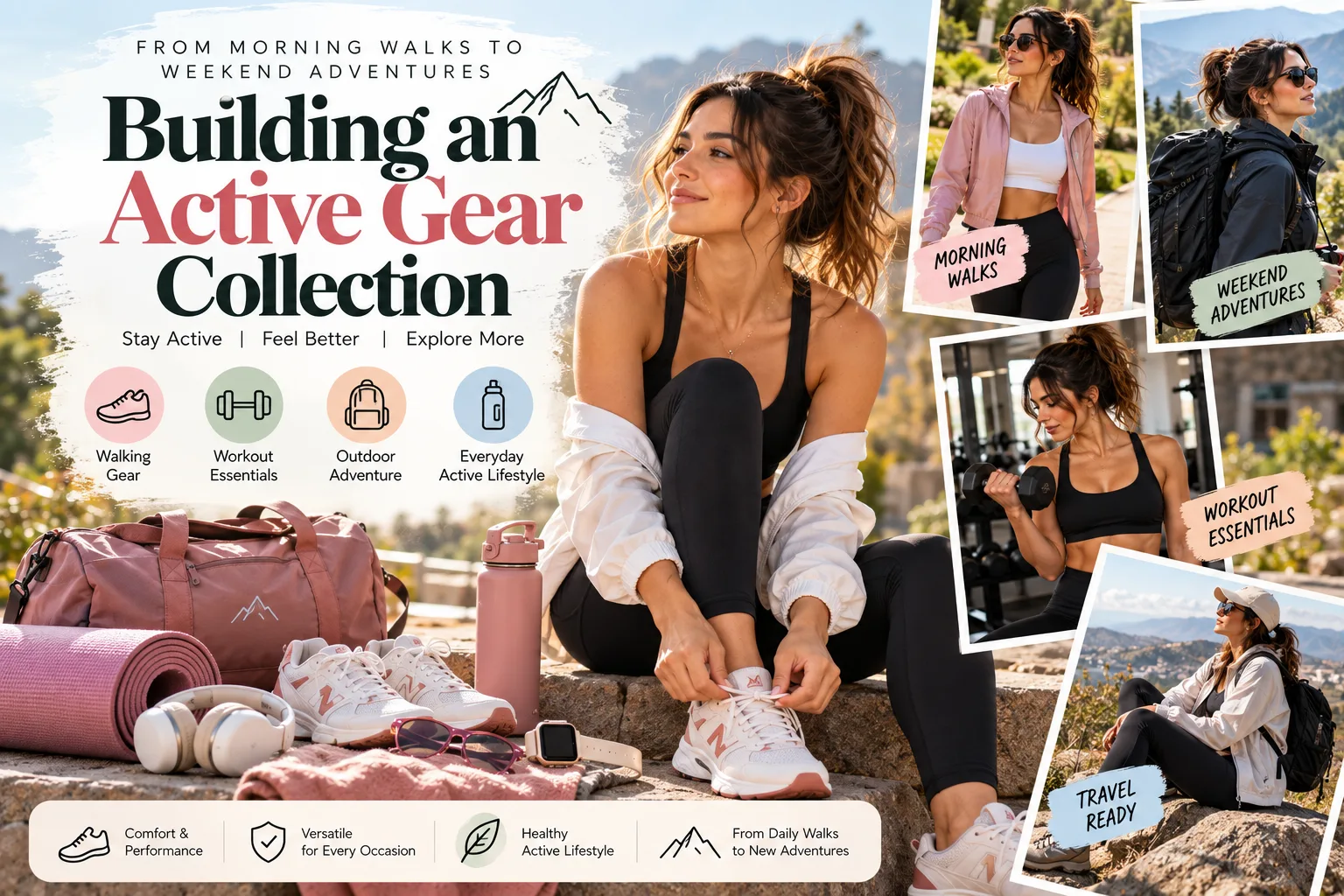
An active lifestyle doesn't have to revolve around intense workouts. It can be as simple as taking a morning walk, playing a weekend game of tennis, heading out for a hike, or spending an afternoon on the golf course.
What matters is having gear that fits the activities you actually enjoy. Instead of buying equipment based purely on trends, building a practical collection around your routine can make getting active much easier.
Make Walking Part of Your Routine
Walking is one of the easiest activities to incorporate into a busy schedule. You can walk before work, during a lunch break, while traveling, or simply take a longer route home.
The right comfortable walking shoes can make these everyday miles more enjoyable. Look for a fit that gives your feet enough space and a sole that feels appropriate for the surfaces you regularly walk on.
A good everyday pair should also work with your normal wardrobe. That makes it easier to use the same footwear for errands, casual outings, and daily activities.
Prepare for Outdoor Adventures
When your weekend plans involve trails rather than sidewalks, your footwear requirements change.
A pair of outdoor shoes can be useful for people who enjoy exploring parks, trails, and other outdoor environments. Depending on the terrain and weather, you may want additional traction, stability, or protection.
It's also worth considering what you carry with you. Socks, insoles, and other small accessories can become valuable additions to an outdoor kit, particularly when you're spending several hours away from home.
Think About Your Favorite Sports
Different sports create different movement patterns. Tennis and pickleball involve short bursts of movement and frequent changes in direction. Golf involves substantial walking, while running creates repeated impact with every stride.
If racquet sports are part of your routine, tennis and pickleball shoes can be worth considering instead of using general walking footwear.
FitVille's current range includes activity categories for tennis and pickleball, hiking, running, golf, walking, and standing, giving shoppers the opportunity to explore footwear according to how they spend their time.
Don't Forget the Small Accessories
Footwear may be the foundation of an active gear collection, but accessories can complement it.
For example, a comfortable pair of socks can be useful for everyday movement, while insoles can provide another way to customize the feel of your footwear. Ankle supports and braces may also be relevant for people who use them as part of their personal activity routine.
The important thing is to choose accessories based on a genuine need rather than simply adding more items to your collection.
Choose Gear You Will Actually Use
It's easy to get carried away when shopping for sports apparel and accessories. There is always another style, another color, or another piece of equipment to consider.
A more practical approach is to start with your weekly routine.
If you walk every day, prioritize everyday walking footwear. If you run several times a week, focus on running-specific options. If weekends are spent outdoors, consider hiking or trail footwear. And if you regularly play golf or racquet sports, look for options designed around those activities.
This approach keeps your collection useful rather than unnecessarily large.
Create a Flexible Active Lifestyle
The best sports gear doesn't have to be reserved for a single activity. A well-planned collection can support different parts of your lifestyle while keeping comfort at the center.
Whether you're preparing for a morning walk, planning a weekend hike, or looking for footwear for your favorite sport, FitVille offers categories that can be explored according to different activities and fit preferences.
What Should You Buy First? A Simple Order for Your Active Gear Collection
Buy in the order of how often you'll use each item. A pair you wear daily earns its place faster than one you use twice a year.
A practical sequence looks like this:
- Step 1: Everyday walking shoes. Most people walk every day, so this is the most useful first purchase.
- Step 2: Socks that suit your footwear. A few comfortable pairs make a noticeable difference on longer walks.
- Step 3: Your main activity's footwear. Buy running, hiking, golf, or tennis and pickleball shoes once you do that activity regularly, for example 1–2 times a week for a month or more.
- Step 4: A second activity, if needed. Add specialised shoes for weekend sports only after the first purchases are in steady use.
- Step 5: Targeted accessories. Insoles, ankle supports or braces belong here, when you have a specific reason for them.
This order spreads your spending over time and keeps you from buying gear for an activity you only tried once.
How Do You Know If Active Shoes Fit Properly?
A good fit matters more than any single feature. Use this quick checklist when trying on walking, outdoor or sports shoes:
- Shop later in the day. Feet tend to swell slightly by the afternoon, much as they do during activity.
- Wear your usual socks. Thicker hiking socks and thin everyday socks can change the fit noticeably.
- Check toe room. As a rule of thumb, leave about a thumb's width between your longest toe and the front of the shoe.
- Test the heel. Your heel should feel secure without slipping up and down as you walk.
- Move like you will in use. Walk on a hard surface, and for racquet sports, try a few side-to-side steps.
- Ignore "break-in" promises. If a shoe pinches or rubs right away, it's usually the wrong shape for your foot.
If you're between sizes or have wider feet, compare width options where they exist rather than going up a full size.
Fit is only half the story: the right shoe also depends on the activity you do most and the terrain you cover, so see our guide on how to choose the right footwear for an active lifestyle before you buy. As a rule of thumb, try shoes on later in the day while wearing your usual socks, and check both length and width.
When Should You Replace Walking, Running or Sports Shoes?
Replace active footwear when it stops supporting you, not only when it looks worn out. Cushioning can break down well before the upper shows damage.
Watch for these signs:
- Worn tread. Smooth patches on the outsole reduce grip, which matters most on trails and courts.
- Flattened midsole. Creases or a sole that feels firmer and less springy than before.
- Uneven wear. One side of the shoe wears down much faster, or the shoe tilts when placed on a flat surface.
- New aches. Sore feet, shins or knees after activities that used to feel fine.
A commonly cited guideline for running shoes is roughly 300–500 miles (about 500–800 km), depending on your weight, stride and the surfaces you run on. Walking and court shoes have no fixed number, so rely on the signs above.
Rotating two pairs gives each one time to dry out between uses.
Frequently Asked Questions
What gear do I need to start being more active?
Begin with comfortable footwear and breathable clothing suited to your main activity, then add items such as a backpack or water bottle as your routine grows.
How can I make my gear last longer?
Clean and dry items after use, rotate footwear when possible and store gear away from direct heat.
Should I buy specialised gear for each activity?
Not at first. Versatile pieces often cover several activities; specialise only when you know which activities you do most.
Can I use walking shoes for hiking?
For smooth paths and park trails, comfortable walking shoes are often fine. On rocky, muddy or steep terrain, outdoor shoes with more traction and stability are usually the safer choice.
Is it okay to play tennis or pickleball in running shoes?
It's not ideal. Running shoes are designed mainly for forward motion, while court sports involve frequent side-to-side movements. Shoes built for tennis and pickleball are intended to support those lateral moves.
How many pairs of active shoes do I really need?
Many people manage with one or two pairs: an everyday walking shoe and one pair for their main sport or outdoor activity. Add more only when you regularly do an activity your current shoes don't suit.
Do insoles work in any shoe?
Not always. Insoles fit best in shoes with a removable footbed and enough interior volume. Try them in the shoe before relying on them, because they can make a snug shoe feel tight.
Final Thoughts
The goal is simple: choose gear that makes it easier to do the things you already enjoy. When your footwear and accessories fit your routine, staying active can feel much more natural.