
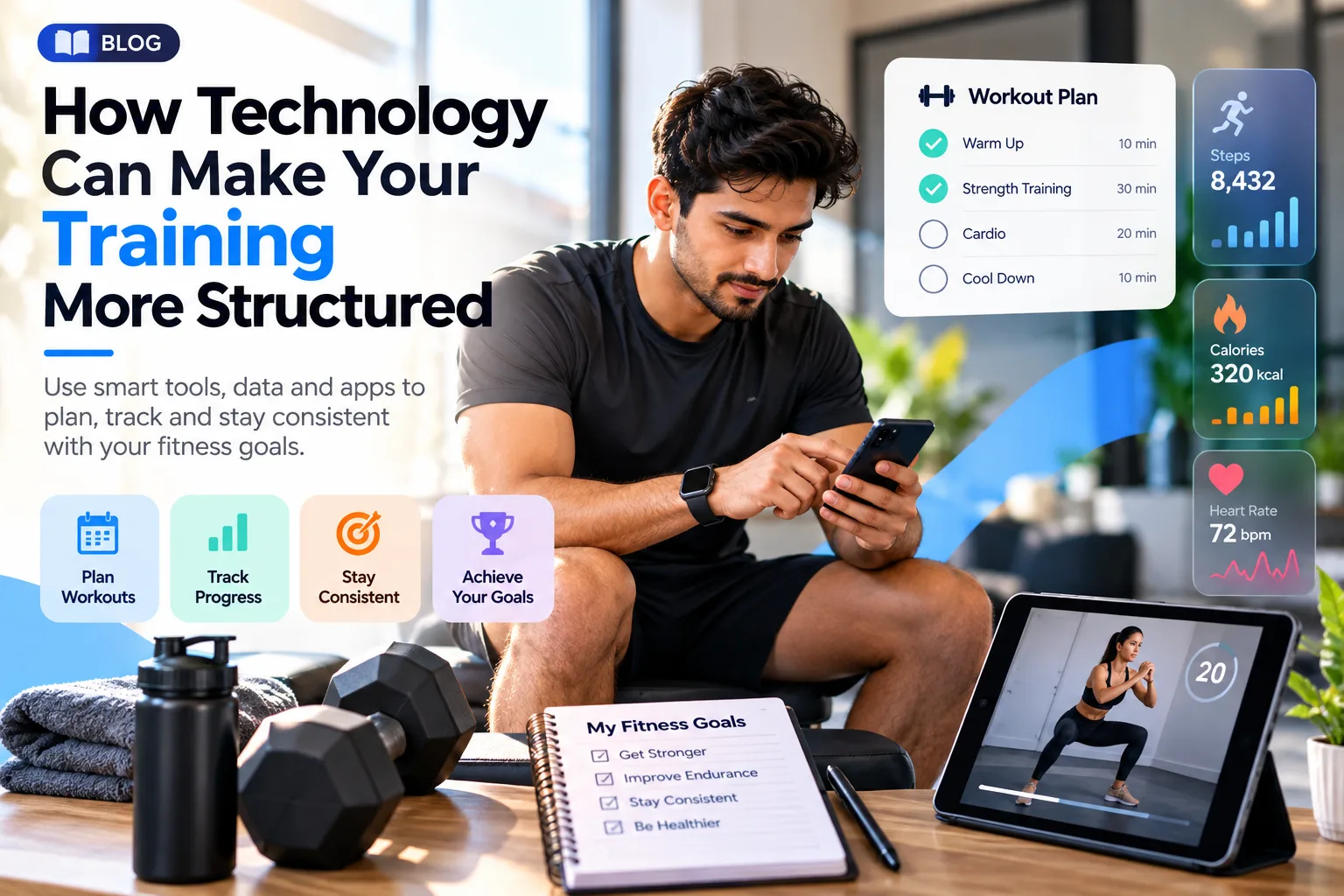
Technology can make your training more structured by turning random sessions into a measurable plan built around a clear goal.
Training consistently is easier when you understand what you're actually doing.
Whether you're preparing for a race, trying to improve your running pace, returning to exercise, or simply becoming more active, tracking your workouts can help turn random exercise sessions into a more structured routine.
Technology doesn't replace effort, but it can provide information that helps you understand your progress.
How Can Technology Make Your Training More Structured?
Wearables and apps are most useful when they support a clear plan. Decide what you want to achieve, then track only the data that helps.
- Pick 1 main goal, such as a 10 km race or more weekly activity.
- Follow 2 or 3 key metrics like pace, distance or heart rate.
- Plan at least 1 rest day each week.
- Review your data every 4 weeks and adjust.
Used this way, apps and wearables help you see whether you are improving and when to ease off, rather than burying you in numbers you never act on.
Related reading: Choosing the Right Gear for Outdoor Training and Adventure
Start With a Clear Training Goal
Before tracking dozens of metrics, decide what you're trying to achieve.
You might want to run a particular distance, improve your pace, increase endurance, become more consistent, or simply complete a certain number of workouts each week.
Once you have a goal, you can decide which information is actually useful.
For runners, running watches can provide data that helps you understand individual workouts and monitor progress over time.
Look at More Than Distance
Distance is one of the easiest metrics to understand, but it isn't the only one that matters.
Depending on your activity, pace, duration, elevation, heart rate, and other measurements can provide additional context.
Workout tracking allows you to look back at previous sessions instead of relying entirely on memory.
Over time, this can help you identify patterns. Perhaps your pace changes depending on the route, or you perform differently after a rest day compared with a busy training schedule.
Understand Your Heart Rate
Heart rate can provide another perspective on exercise intensity.
Heart rate monitoring can help you understand how hard your body is working during different activities.
However, heart-rate data should be interpreted in context. Factors such as temperature, stress, hydration, sleep, fitness level, and medication can affect heart rate.
If you have concerns about exercise intensity or your heart health, professional medical guidance is more appropriate than relying on a wearable alone.
Use Data to Improve Consistency
The most useful training data isn't necessarily the most complicated data.
Simple information can already tell you a lot. Tracking how often you train, how long your sessions last, and how your performance changes can help you understand whether you're actually moving toward your goal.
Modern training metrics can provide more detail, but the important thing is knowing what the numbers mean and how they relate to your training.
Don't let data become a distraction from the actual workout.
GPS Can Help With Outdoor Training
For runners, cyclists, hikers, and other outdoor athletes, location data can add another useful dimension to training.
Sports GPS features can help record routes, distances, and other location-related information during outdoor sessions.
This can be especially useful when exploring new routes or comparing familiar ones over time.
Recovery Matters Too
Training isn't only about how hard you exercise.
Rest and recovery are important parts of any sustainable routine. If you're constantly increasing training volume without allowing enough time for recovery, you may struggle to maintain consistency.
Use workout data as a tool for understanding your routine rather than as a reason to push yourself harder every day.
Find a Balance Between Data and Experience
Wearable technology can provide plenty of information, but you don't need to obsess over every number.
The most useful approach is to choose a few metrics that relate directly to your goals and use them consistently.
SUUNTO offers sports watches and related tools designed around activities such as running, training, hiking, cycling, and other outdoor pursuits. (suunto.com)
SUUNTO can therefore be one option to explore when you're looking for technology to complement an active training routine.
Frequently Asked Questions
How can technology make training more structured?
Sports watches and apps can plan workouts, track progress and show trends so you can adjust your training over time.
Which training metrics should beginners follow?
Start with simple metrics such as duration, distance and heart rate, then add others as you become more experienced.
Can I rely only on data from my device?
Data is a helpful guide, but also listen to your body and rest when you need to.
Final Thoughts
Ultimately, the purpose of tracking isn't to turn exercise into a spreadsheet. It's to understand your training better, recognize progress, and make informed adjustments while keeping the actual enjoyment of movement at the center.