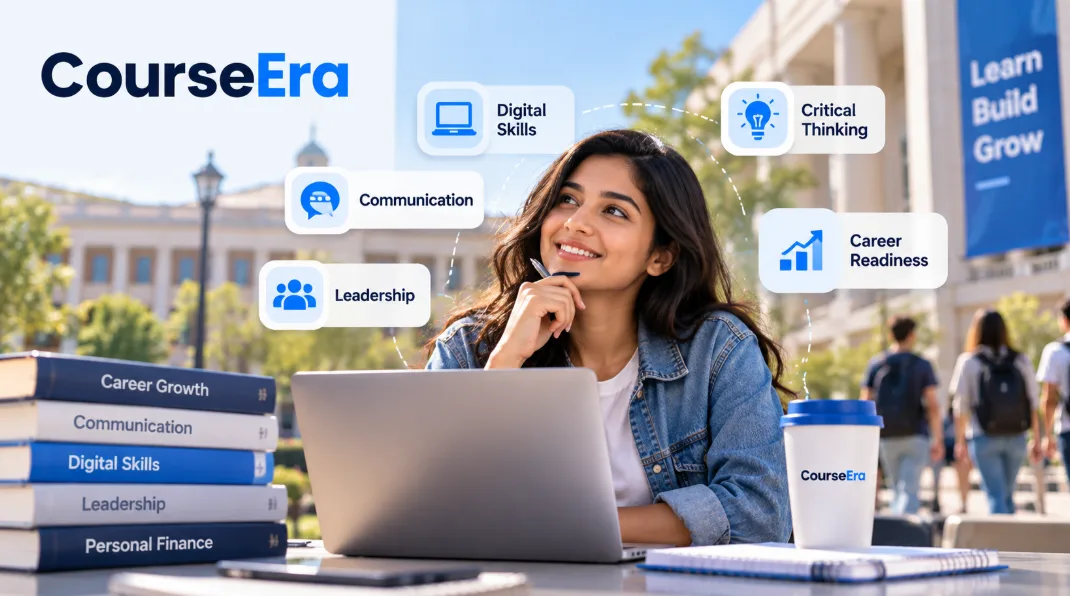
College students can prepare for life after graduation by building five practical skills now: learning how to learn, communication, digital literacy, problem-solving and career planning.
College is about much more than completing assignments, attending lectures, and preparing for exams. It is also a time to explore interests, develop useful habits, and discover the skills that can shape your future career.
A degree provides an academic foundation, but the transition from college to the workplace often requires students to apply what they have learned in practical situations. Communication, digital literacy, problem-solving, and career planning can all become valuable parts of that journey.
The good news is that students don't have to wait until graduation to start developing these abilities.
Which Skills Should College Students Build Before Graduation?
A degree gives you knowledge, but employers also look at how you apply it. College students who practise a few transferable skills during their studies usually find the transition to work far less stressful.
- Learn how to learn: review notes for 15–20 minutes after each lecture.
- Communication: present or write for an audience at least 1 time each semester.
- Digital literacy: get comfortable with 2–3 tools used in your field.
- Problem-solving: take on 1 real project, club role or volunteer task.
- Career planning: update your resume every 6 months.
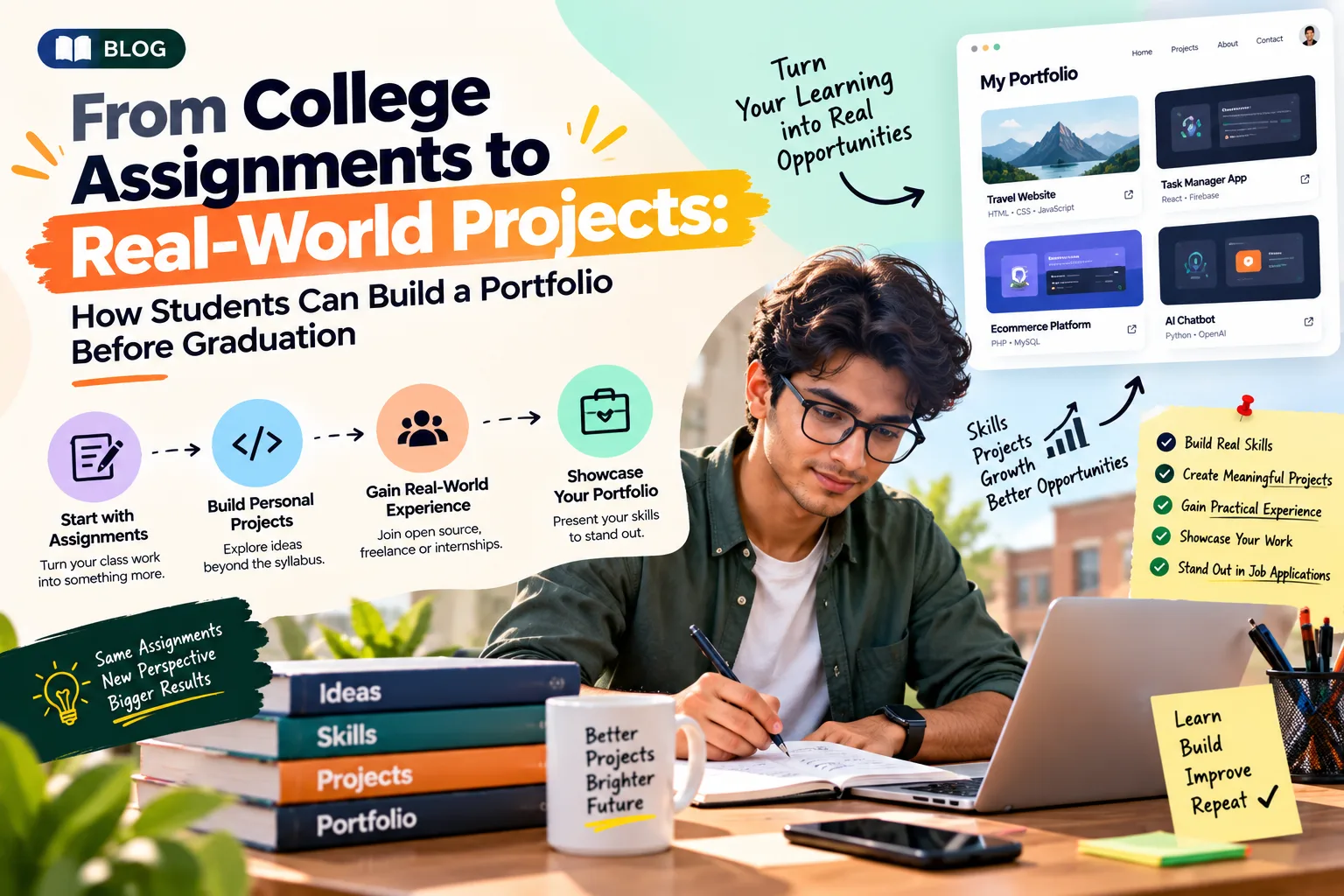
Related reading: From College Assignments to Real-World Projects: How Students Can Build a Portfolio Before Graduation
1. Learn How to Learn
One of the most valuable abilities a student can develop is knowing how to learn independently.
College introduces students to a wide range of subjects, but professional life can require learning completely new tools and concepts. Technology changes, industries evolve, and job responsibilities can shift over time.
Learning how to research information, evaluate sources, take useful notes, and break complicated subjects into manageable pieces can make studying more effective.
These are foundational college skills that can remain useful long after graduation.
2. Build Digital Skills Alongside Your Degree
Almost every modern career involves some level of technology.
A business student might benefit from understanding data analysis. A marketing student may want to explore analytics and digital advertising. Someone studying design could benefit from learning new creative software or understanding emerging technologies.
The specific skill depends on the student's field, but the broader idea is the same: don't limit your education to the subjects listed on your degree plan.
Online learning platforms can give students an opportunity to explore areas outside their primary major. Coursera, for example, offers courses across areas including artificial intelligence, data science, business, computer science, information technology, and marketing.
3. Develop Communication Skills
Technical knowledge can help you qualify for opportunities, but communication can influence how effectively you use that knowledge.
Students can practice communication in everyday college life by participating in presentations, group projects, discussions, and student organizations.
Written communication matters too. Being able to write a clear email, explain an idea, summarize research, or create a professional resume can become useful when applying for internships and entry-level positions.
Communication is also a skill that improves with practice. The earlier students start working on it, the more natural it can become.
4. Start Thinking About Your Career Before Graduation
Career planning doesn't have to mean deciding exactly what you will do for the next 30 years.
Instead, college students can use their time to explore different industries and identify the types of work that interest them.
Try asking questions such as:
- What type of work do I enjoy?
- Which skills do employers in my field commonly ask for?
- What roles could I pursue after graduation?
- Which skills am I currently missing?
- Can I gain practical experience before completing my degree?
This process can make it easier to identify useful career-ready skills and decide where additional learning might be worthwhile.
Coursera's current student and higher-education offerings specifically emphasize job-relevant skills, hands-on learning, and professional credentials that can complement academic education.
5. Use Online Learning to Explore Beyond Your Major
One of the advantages of being a college student today is access to learning resources beyond the traditional classroom.
Students can use online courses to explore subjects that aren't part of their regular curriculum. This could mean taking an introductory course in programming, learning about project management, exploring entrepreneurship, improving academic writing, or developing an understanding of artificial intelligence.
The goal isn't to collect as many courses as possible.
Instead, choose learning opportunities that answer a specific question or solve a specific skill gap.
For example, a student interested in marketing might explore analytics. Someone considering a technology career might experiment with programming. A student interested in research could strengthen their academic writing and information-literacy skills.
Coursera's catalog includes courses, Specializations, Professional Certificates, and degree programs from universities and industry organizations, allowing learners to choose different levels of commitment depending on their goals.
6. Consider Earning a Professional Certificate
A degree and a professional credential serve different purposes.
Your degree demonstrates your academic background, while a professional certificate can help demonstrate knowledge or skills in a particular area.
For students, this can be particularly useful when they want to explore a career path that isn't directly connected to their major.
For example, someone studying a non-technical subject might explore data analytics or digital marketing. A business student might develop additional project management or technology skills.
Coursera currently offers Professional Certificates from organizations such as Google, IBM, and other industry partners, alongside university programs.
However, the value of any certificate ultimately depends on what you learn from it and how you can apply those skills. A credential is most useful when it represents genuine learning rather than simply another line on a resume.
7. Don't Ignore Academic Skills
Career preparation shouldn't come at the expense of becoming a better student.
Research, information literacy, academic writing, effective note-taking, and time management can make a significant difference during college.
Coursera's student-focused catalog includes learning options covering areas such as academic writing, information seeking, listening and note-taking, and learning techniques.
These abilities may not always appear on a resume, but they can influence how effectively you learn and work.
8. Focus on Projects, Not Just Certificates
Learning becomes more meaningful when you can apply it.
If you complete a course about data analysis, try working with a dataset. If you study digital marketing, create a small campaign plan. If you learn programming, build a simple project.
Projects give students something concrete to discuss during interviews and can help demonstrate how they approach real problems.
More importantly, they turn passive learning into active practice.
Frequently Asked Questions
When should students start building career skills?
As early as the first year. Small, regular steps add up over three or four years of study.
Do employers care about skills outside the degree?
Many do. Communication, problem-solving and digital skills often help candidates stand out alongside their qualifications.
How can I practise communication skills at college?
Volunteer to present in class, join a club or society, and ask for feedback on your writing.
Final Thoughts
College is a unique period because students have the opportunity to build both academic knowledge and practical skills at the same time.
Your major provides an important foundation, but there is value in developing abilities that extend beyond your core curriculum. Learning how to communicate, work with technology, solve problems, research effectively, and explore potential career paths can help you prepare for life after graduation.
You don't need to master everything before leaving college.
Instead, identify the areas that genuinely interest you, find opportunities to practice them, and gradually build a portfolio of knowledge and experience.
The most useful education may not always be the subject you were originally enrolled to study. Sometimes, it is the skill you decided to learn alongside it.