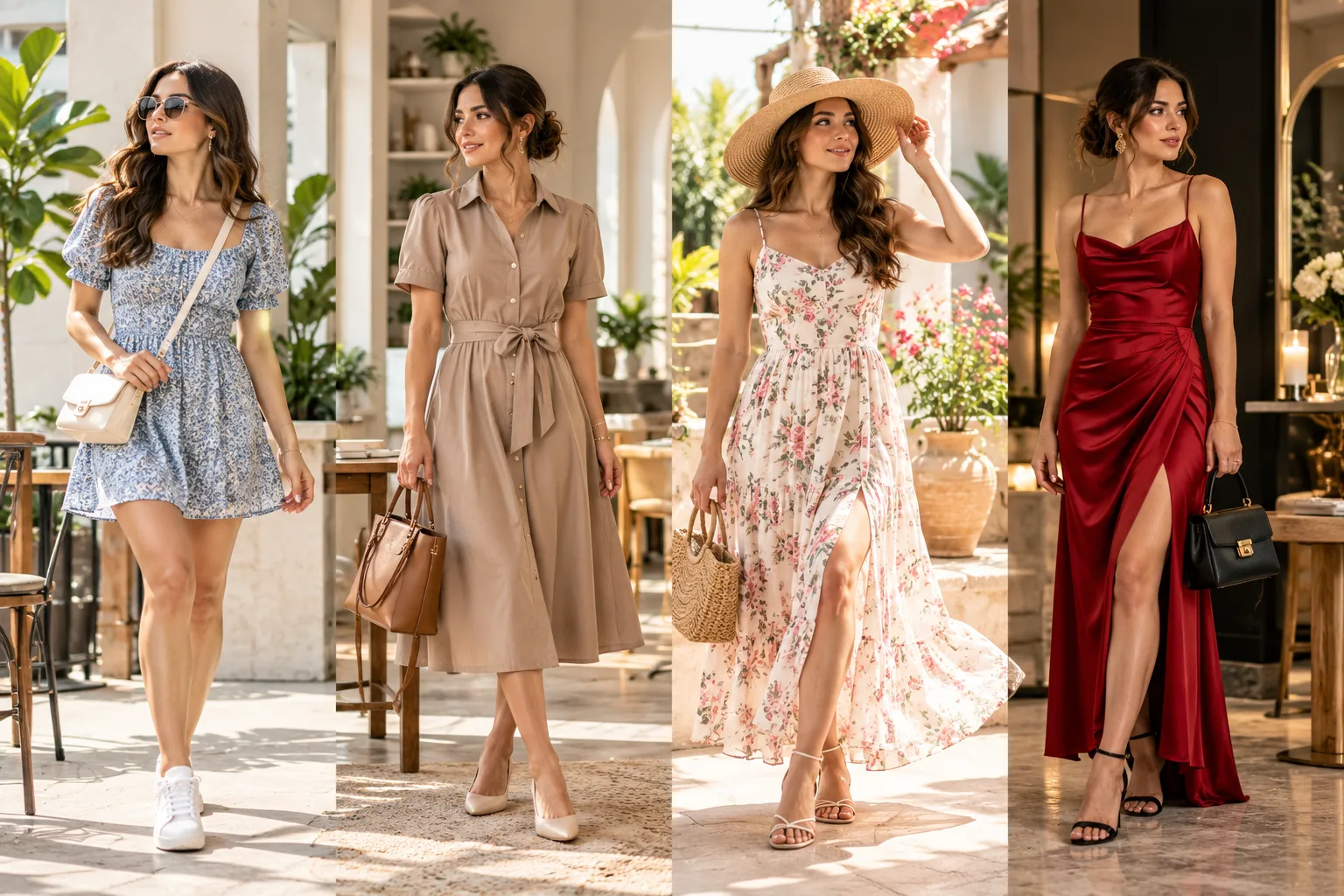
The right dress depends on the occasion, the weather and how comfortable you feel in it, so start with where you're going and build the look from there.
A good dress can make getting dressed surprisingly simple. Instead of putting together multiple separate pieces, you can often create a complete look with just one item and a few well-chosen accessories.
But not every dress works for every occasion.
The right choice depends on where you're going, the weather, the level of formality, and most importantly, what makes you feel comfortable. From relaxed daytime outfits to polished evening looks, understanding the different styles can make building your wardrobe much easier.
How Do You Choose the Right Dress for an Occasion?
Finding the right dress becomes much easier when you ask a few practical questions before you shop or get dressed.
- Define the occasion: casual, smart or formal covers most of the 3 main categories.
- Check the weather and choose breathable fabrics for warm days.
- Make sure you can sit, walk and move comfortably for 2–3 hours.
- Pick 1 versatile neutral dress you can restyle with different accessories.
- Swap shoes and jacket to move the same dress from day to evening.
Related reading: The Bralette Edit: How to Style This Versatile Women's Essential
Start With the Occasion
Before choosing a dress, think about where you'll actually be wearing it.
A dress for a weekend coffee date doesn't need the same structure as something you'd wear to a formal dinner. Similarly, a lightweight summer dress may be perfect for a daytime outing but less suitable for a professional setting.
This is why having a few different types of women's dresses in your wardrobe can be more useful than owning several versions of the same style.
Think about your lifestyle first, and then choose dresses that fit naturally into it.
Casual Dresses for Everyday Plans
For everyday wear, comfort usually comes first.
Casual dresses can be useful for everything from running errands and meeting friends to relaxed lunches and weekend activities. Simple silhouettes, comfortable fabrics, and easy-to-wear colors make these dresses particularly versatile.
Pair a casual dress with sneakers for a relaxed look, or switch to sandals and a structured bag when you want something slightly more polished.
The beauty of a casual dress is that you don't need to overthink it.
The Versatility of Midi Dresses
If you're looking for something that can transition between different settings, consider the midi length.
Midi dresses typically fall somewhere between the knee and ankle, making them versatile enough for both casual and more dressed-up occasions.
A simple midi dress can work with sneakers during the day, while heels and statement jewelry can change the entire look for an evening event.
The silhouette also works well across different seasons. Add a lightweight jacket or cardigan when temperatures drop, or keep the look minimal during warmer weather.
Summer Calls for Lightweight Styles
When temperatures rise, fabric and silhouette become particularly important.
Summer dresses are often designed with lightweight materials and relaxed silhouettes that make them comfortable for warm-weather days.
Flowing shapes, breathable fabrics, short or midi lengths, and lighter colors can all contribute to an easy summer wardrobe.
For daytime outings, pair a lightweight dress with sandals and a simple handbag. If you're heading somewhere in the evening, adding a lightweight layer and a few accessories can make the same dress feel more refined.
Dressing for an Evening Occasion
Evening events usually call for a little more attention to detail.
Evening dresses can range from sleek and minimal designs to more dramatic silhouettes, depending on the occasion.
For a dinner, cocktail event, or celebration, consider the setting before choosing your outfit. A fitted silhouette might work well for a sophisticated dinner, while a flowing design could be better suited to a relaxed evening gathering.
Accessories can also make a significant difference. Statement earrings, a small handbag, and dressier shoes can transform a relatively simple dress without requiring a completely new outfit.
Think About Fabric
The silhouette may catch your attention first, but fabric can determine how comfortable and practical a dress actually is.
Lightweight fabrics can work well during warmer months, while thicker materials may be more appropriate when temperatures fall.
Also consider how the fabric moves when you walk and whether it requires special care.
If you're buying online, product descriptions can provide useful information about the material, fit, and care requirements.
Don't Ignore the Fit
A dress can look completely different depending on how it fits.
Pay attention to measurements rather than relying only on the size label. Different manufacturers can use different sizing standards, so checking the measurements provided with the product can help you make a more informed choice.
Consider the shoulders, bust, waist, and length.
If you're between sizes, also think about whether the particular design is intended to have a relaxed or fitted silhouette.
Build Around Your Existing Wardrobe
Before buying another dress, look at what you already own.
If most of your wardrobe consists of neutral basics, a dress with an interesting print or color could add variety.
On the other hand, if you already have several statement pieces, a simple neutral dress might give you more versatility.
The goal isn't to own the largest collection.
It's to own pieces that you can actually combine with your existing shoes, bags, jackets, and accessories.
Accessories Can Change Everything
One dress can create several different outfits when you change the accessories.
For a daytime look, try:
- Sneakers or flat sandals
- A crossbody bag
- Minimal jewelry
For a more polished look:
- Heels or dressier footwear
- A structured handbag
- Statement jewelry
For cooler weather:
- An oversized cardigan
- Ankle boots
- A lightweight jacket
This makes versatile dresses particularly valuable because you can adapt them without completely changing your wardrobe.
Consider the Season
A practical dress wardrobe should work throughout the year.
During spring and summer, lightweight fabrics and relaxed silhouettes can keep things comfortable.
For autumn and winter, longer sleeves, heavier fabrics, tights, boots, and layering pieces can help make dresses more suitable for cooler temperatures.
A versatile dress doesn't necessarily have to be season-specific. With the right layers, some styles can work throughout multiple seasons.
Quality Over Quantity
It's easy to keep adding new pieces to your wardrobe, especially when shopping online.
But a smaller collection of versatile dresses can often be more useful than a wardrobe filled with pieces you rarely wear.
Before buying, ask yourself:
Can I wear this more than once?
Can I style it differently?
Does it work with shoes and accessories I already own?
Is the fabric suitable for the way I intend to wear it?
If the answer is yes to most of these questions, the dress is more likely to become a regular part of your wardrobe.
Frequently Asked Questions
What dress works for most occasions?
A simple dress in a neutral colour and versatile cut can usually be dressed up or down with accessories.
How do I know if a dress is too formal?
Consider the venue, time of day and any dress code. Evening events usually allow more formal fabrics and structure than daytime plans.
Which fabrics are best for warm weather?
Lightweight, breathable fabrics such as cotton and linen are usually the most comfortable on warm days.
Final Thoughts
Choosing the right dress isn't about following one set of fashion rules.
It's about understanding your lifestyle, the occasion, the season, and your personal preferences.
A few versatile styles can take you from casual weekends to summer outings and evening occasions without making your wardrobe unnecessarily complicated.
Instead of looking for a dress that works for absolutely everything, build a collection where each piece has a clear purpose — and where you can create multiple looks simply by changing your shoes, layers, and accessories.